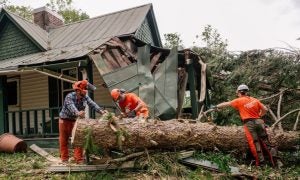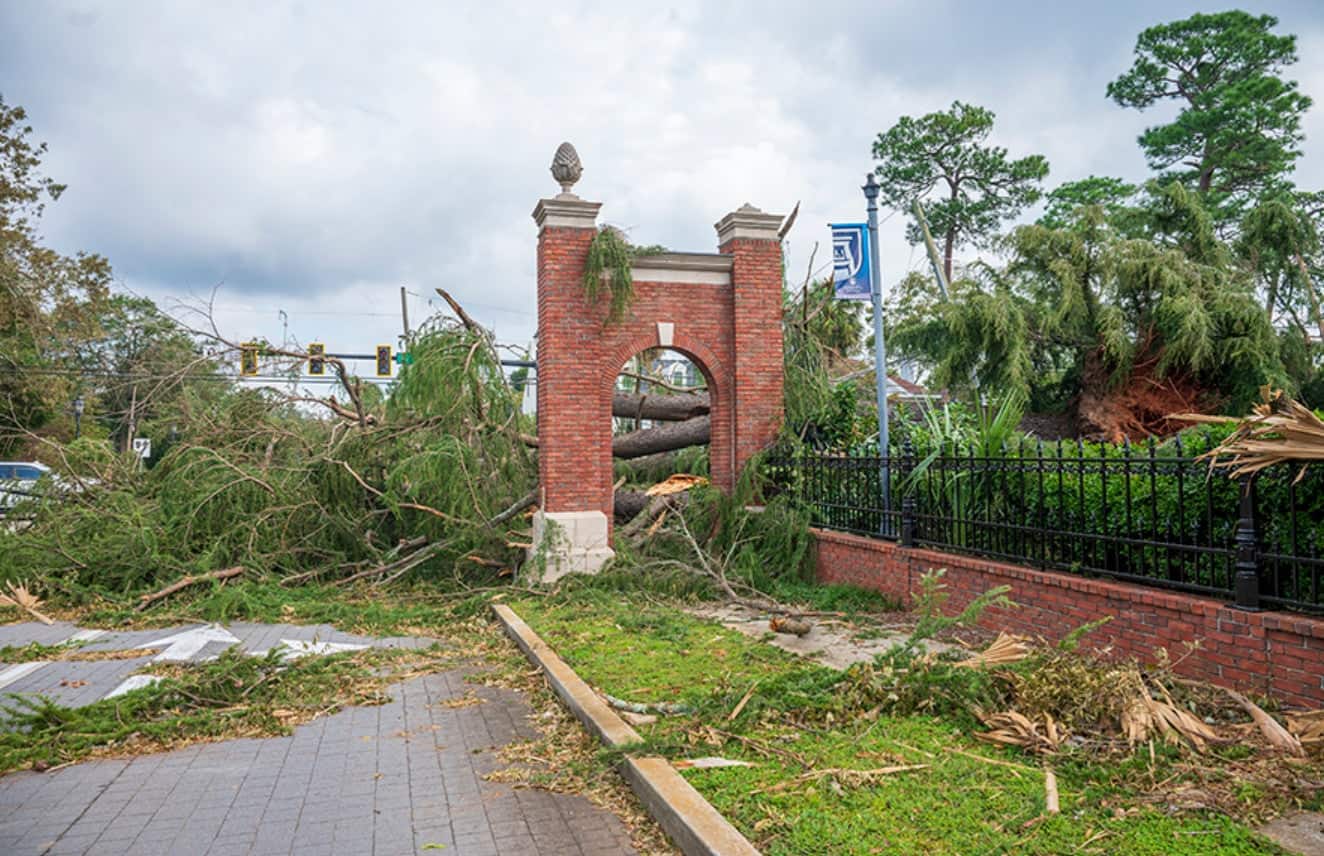
AU’s three campuses, Summerville, Health Science, and Forest Hills, lost thousands of trees in the hurricane-strength winds during Hurricane Helene in 2025.
The Community Foundation for the CSRA (CFCSRA) and Sand Hills Garden Club joined with Augusta University (AU) to repopulate its tree canopy following the damage wrought by Hurricane Helene.
The most noticeable was the huge Deodar cedar tree at the main entrance to the Summerville campus.
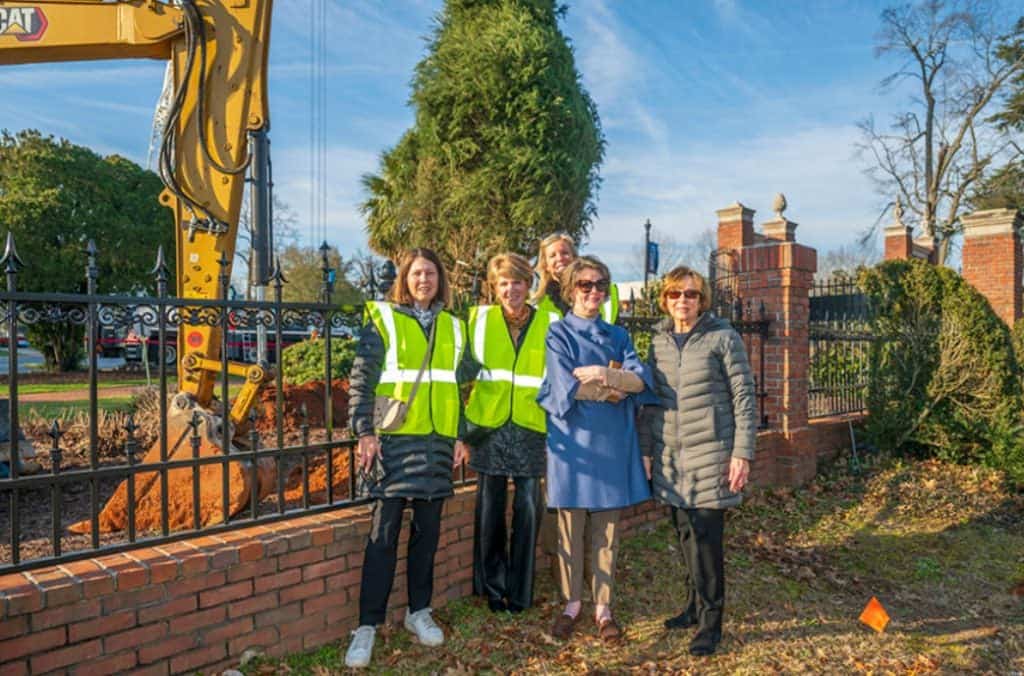
That is where the garden club and CFCSRA stepped in. Shell Berry, President and CEO of CFCSRA, told ABD the garden club is celebrating its 100th anniversary and wanted to mark it by helping replace the Deodar cedar.
“Sand Hills applied to the Hurricane Helene Community Crisis Fund here at the Community Foundation and received two grants. A matching grant award to purchase the trees, as well as a grant to support community educational efforts,” she explained. “We are thrilled that Sand Hills raised the matching funds, partnered with a great institution like Augusta University, and dedicated themselves to restoring our beautiful and important urban forest.”
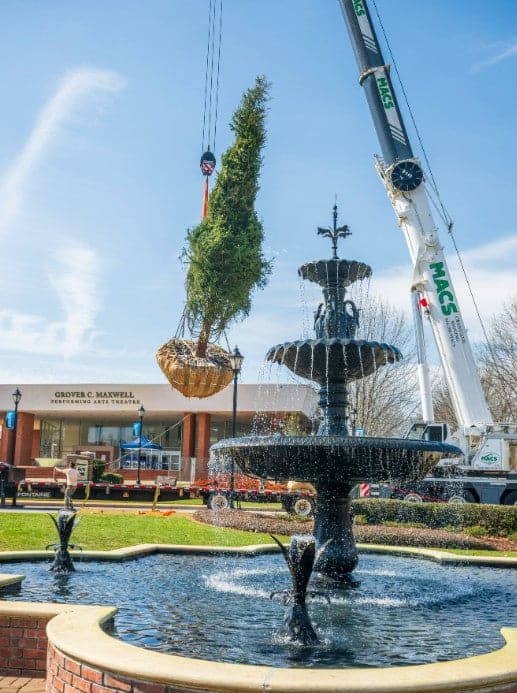
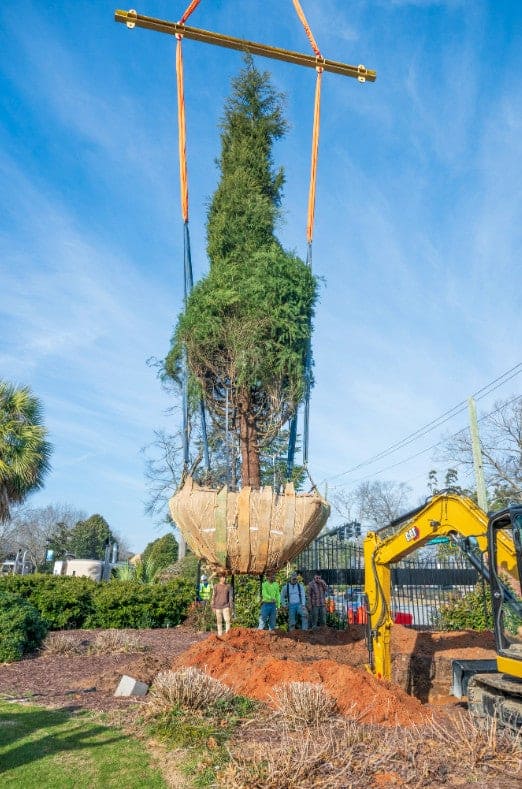
In early February, two Deodar cedar trees were transported to the Summerville campus and planted.
Anna Lacey, AU’s Director of Grounds, said they turned to Jeff Covell, the President and Founder of More Than Trees, Inc., who found the replacements at a tree farm in Goldston, NC.
“He kind of just scours the southeast and the northeast for tree locations that he may need one day,” she said, adding the cedars were on his inventory list. “So, I went up to see him, and he took me to look at a bunch of trees. Several trees were in the field, and these are the two that we picked.”
Lacey came to AU in 2025, so she was not familiar with the pre-hurricane appearance of the Summerville campus. She said, in a way, that was an advantage.
“I can never replicate what was here because I don’t know what it looked like before. I can look at pictures and stuff, but it’s a great opportunity, because there are new and improved trees. There are new and improved varieties that have a lot of benefits to using instead of the older trees that were here,” she said. “So sometimes it’s a good thing that you have loss of trees, not catastrophic like this, but it’s a different opportunity.”
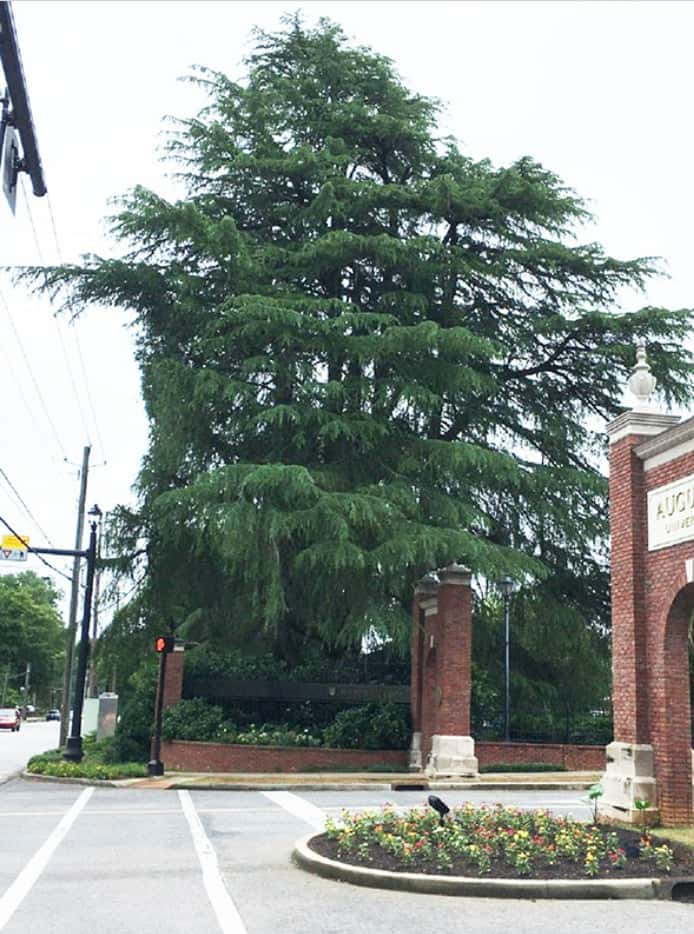
The tree that had stood at the main gate was hundreds of years old. In 2020, it was recognized as a Georgia Champion Tree by the Georgia Forestry Commission. That meant it met specific characteristics:
- It must have an erect woody perennial stem, or trunk, at least 9.5 inches in circumference measured 4.5 feet from the ground.
- It must have a definitely formed crown of foliage and be at least 13 feet in total height.
- It must be a species recognized as native or naturalized in the continental United States.
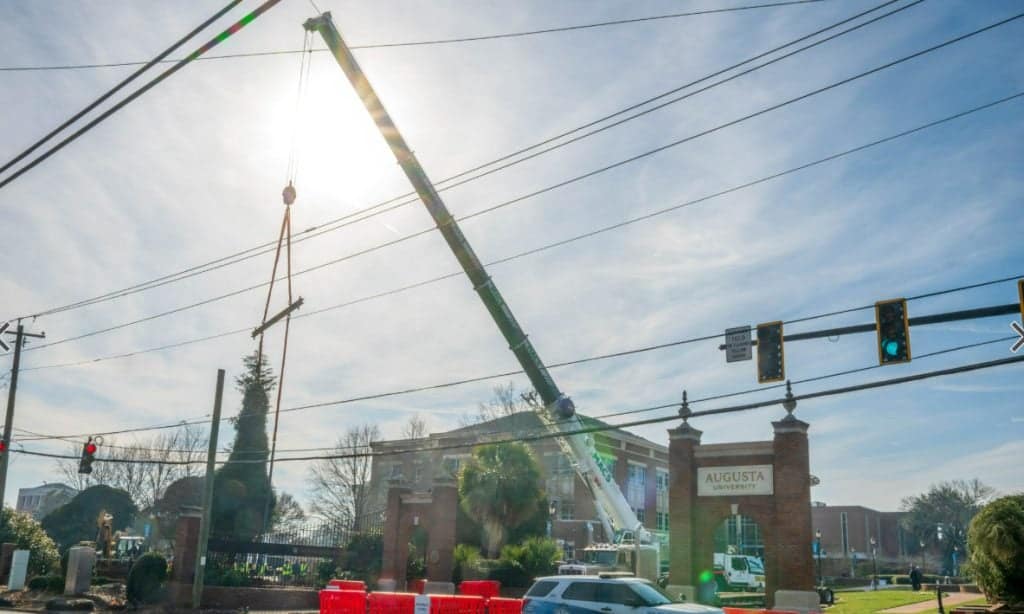
Lacey is continuing the process of replanting trees on the campuses. She said it will be a mixture of native and non-native trees, depending on which is best for each location.
AU is working to schedule a dedication ceremony to be held in March. Lacey said it is a way to highlight the importance of trees and the campus.
“That gift is a reflection of how important this campus is to the members of Sand Hills and how important the replanting of memories is to those ladies,” she said. “It was just an enormous gift and blessing to the university, the campus, the community, the neighborhood.”