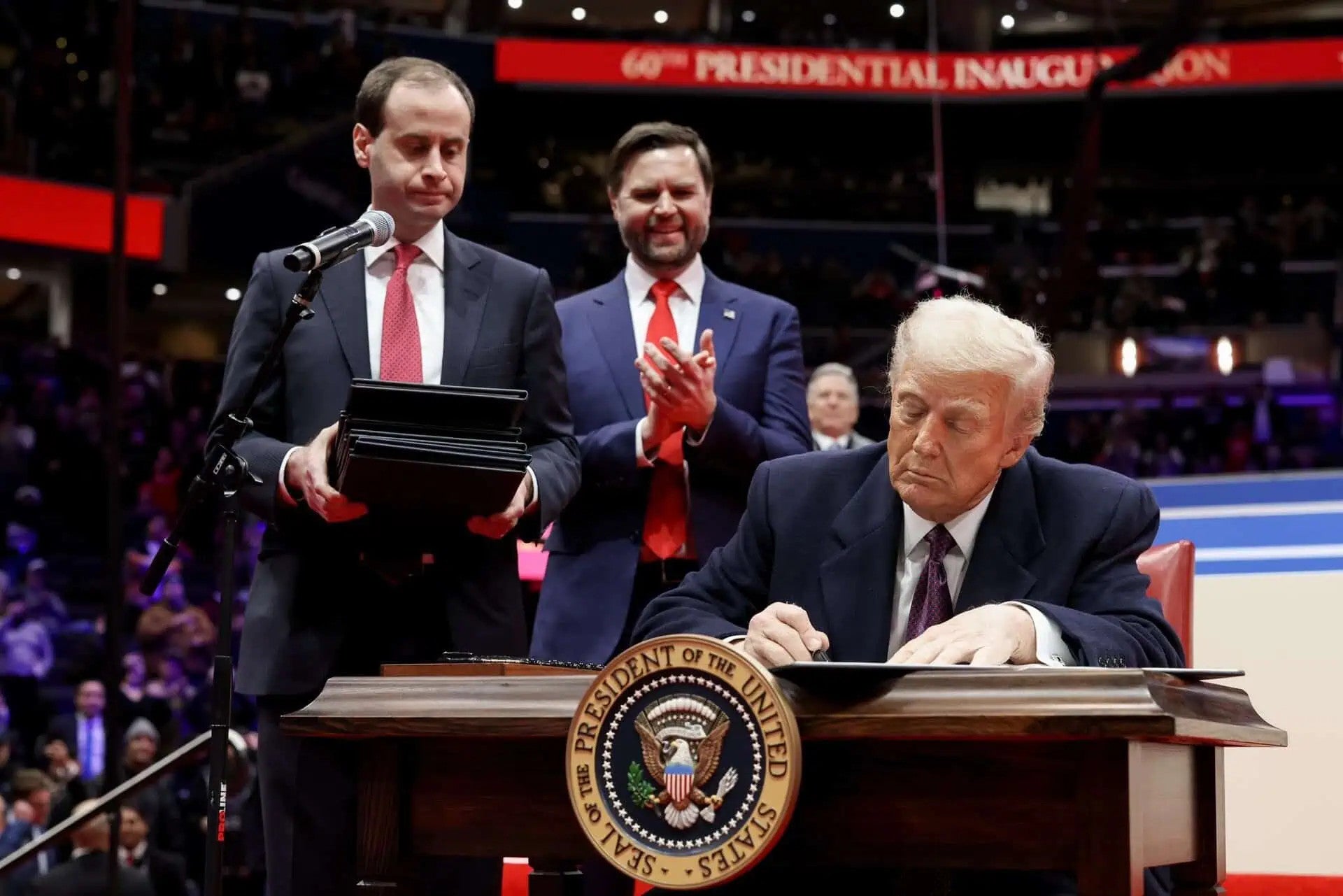

While it has been a while since I have written a column on leadership, recent events have indicated to me that this is an appropriate time to address what I consider some of the most important and necessary leadership traits. Understandably, we put significant emphasis and priority on a leader’s competence. We expect a good leader to demonstrate expertise, relevant knowledge, and the ability to make sound decisions. Such competence is a necessary, but not sufficient, condition for effective leadership. In my opinion, and the opinion of many others, a leader’s competence can be undermined by a lack of other what I believe are “leadership essentials”: honesty, integrity, and accountability. In today’s column, I will attempt to provide an apolitical evaluation of President Donald Trump’s leadership in the first several months of his current leadership to help us all be better leaders in the future.
While most members of the Democratic Party are loath to give President Trump credit for anything, I think most impartial observers can acknowledge some good work by the President and his administration since his inauguration a little over six months ago. One obvious area of improvement is the area of illegal immigration. According to CBS News, from March 2021 to December 2024, illegal southern border crossings ranged from 170,000 to 250,000 per month. Since the start of the latest Trump administration, such crossings have decreased to less than 10,000 per month, the lowest levels since the late 1960’s. Additionally, in foreign affairs, in at least the short run, it appears that the bombing of nuclear facilities has slowed Iran’s ability to develop nuclear weapons. While the long-run implications of the bombing are still uncertain, impeding Iran’s capabilities and demonstrating deterrence are clear wins. Finally, while not everyone might agree with the administration’s tariff policies, they have resulted in some favorable trade deals and some diplomatic victories. While President Trump’s most ardent followers would say that I missed several other significant accomplishments, I would think the three I mentioned do a reasonable job of demonstrating the President’s competence early on in his term.

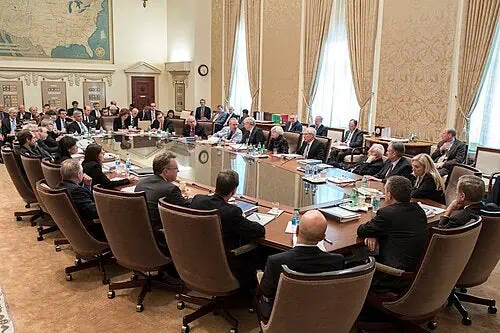
However, while many would be satisfied with the President’s record so far in this term, it is obvious that he is not. It appears that the President expects to “go undefeated,” that is, being right every time and “winning” every time. Therefore, when things do not go as he promises or expects, he tends to either deal with that adversity by being less than fully truthful or by avoiding accountability through assigning blame to someone else. For instance, one of President Trump’s favorite “punching bags” is Federal Reserve Chairman, Jerome Powell. According to the President, any problem with the economy or the stock market is usually the fault of Mr. Powell, because he and the rest of the Federal Open Market Committee (FOMC) have been slow to reduce interest rates. However, the reason the FOMC has been slow to reduce rates is because of the uncertainty caused by the President’s tariff policy. It will take time to determine the impact of the tariffs, so the FOMC is being prudent in waiting to lower rates. So, President Trump is not taking any accountability for a problem (uncertainty) he is likely causing.
The main reason that the Fed/FOMC is reluctant to cut rates is that it would be unwise to do so if inflation is not under control. The Fed’s target rate for inflation is 2.0% annually, and unfortunately, the annual inflation rate jumped from 2.4% to 2.7% in June, while the “core inflation rate” (which excludes the more volatile food and energy prices) jumped to 2.9%. However, that did not stop him from claiming two weeks ago that core inflation is below 2.0%. The President is doing much better on inflation than his predecessor, but that still is not enough for him. He is determined to provide a narrative that shows him winning on everything all the time.
Unfortunately, most of his dishonesty and failure to take accountability are related to the economy. When it comes to tariffs, he and many of his proxies, particularly Commerce Secretary, Howard Lutnick, give the impression (or say directly) that exporting countries pay tariffs, when, for the most part, tariffs are paid by the importing company and are often passed on to the consumer. Finally, in a most recent example of not taking accountability, President Trump fired the Commissioner of the Board of Labor Statistics, claiming that the latest employment numbers provided last week were “rigged.” There are several potential explanations for the numbers and revisions, some of which could be related to his economic policies, but some of which could be related to data collection issues. Immediately claiming the numbers were “rigged” was unnecessary and another instance of potential dishonesty and lack of accountability.
The biggest issue presented by dishonesty and lack of accountability is the erosion of trust. While President Trump has done some very good things early in his term, his inability to admit mistakes and be less than honest in some of his communications will ultimately lose the trust of the American people, particularly in a time of crisis. Given the state of foreign affairs and our national debt, a time of crisis is not out of the question. In addition, a lack of accountability by blaming others makes him less able to learn from his mistakes and more likely to repeat them.
This is an important lesson we all need to learn as business and organizational leaders. Lacking honesty and accountability will cause our constituencies (e.g., employees, customers, stakeholders) to lack the necessary trust in us to support a positive workplace culture, no matter how competent we are. Accountability and honesty are the hallmarks of great leaders of great organizations.