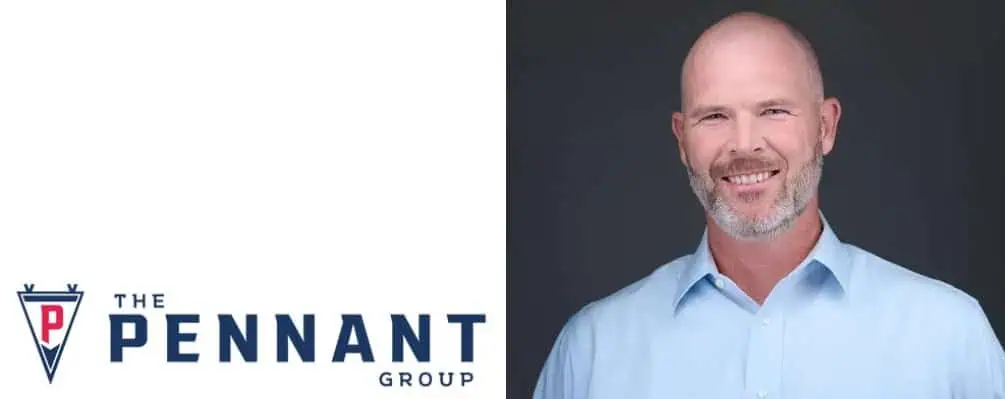
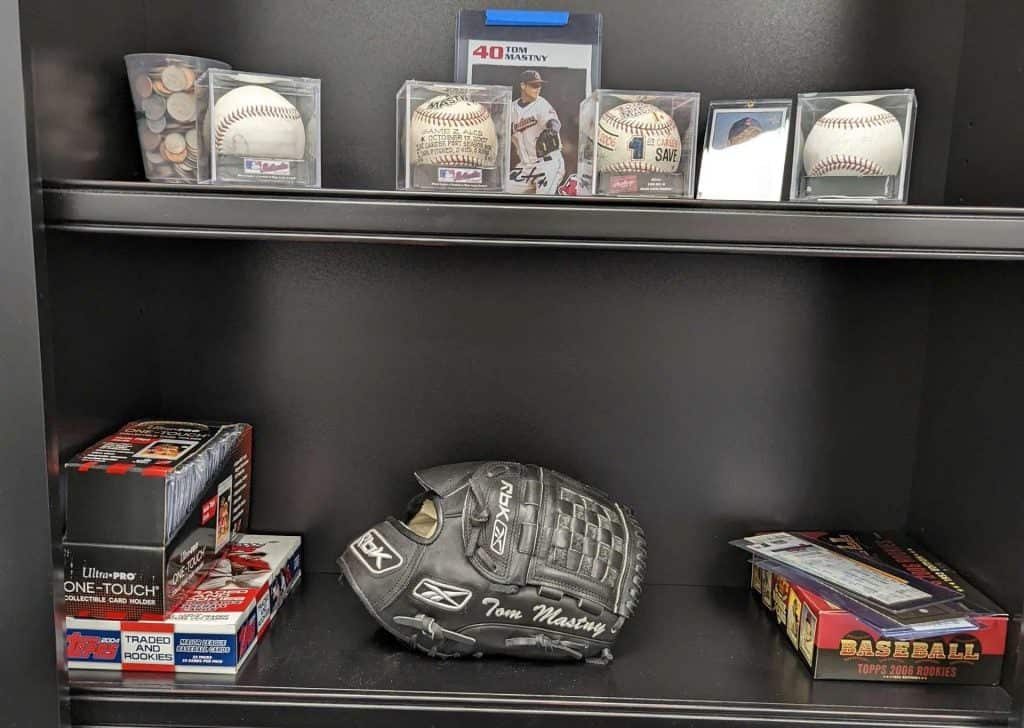
Publisher’s Note: Former Cleveland Indians pitcher, Tom Mastny, formed The Pennant Group in July of 2021. The Pennant Group, an Augusta independent healthcare consultant agency, has grown from 4 employer clients and 0 individual clients, to nearly 75 group clients and 300 individual & Medicare clients since then. The Pennant Group specializes in Health insurance benefits for every stage of an individual’s life. They offer employer-sponsored group coverage, individual coverage, and Medicare services. In this wide-ranging interview, he shares important deadlines, industry insight, and how his clients benefit from Tom managing his office like a championship baseball team.
ABD: What key deadlines in December do readers need to know about enrollment?
PG: The deadline to enroll in or change your individual plan is THIS MONDAY, December 15th. If someone misses the deadline, and they are currently insured, their policy will potentially renew. If this is the case, they will most likely be mapped to a similar plan, and their premium will most likely change, but their coverage will continue. Monday is the deadline to make any plan selection changes or to enroll.
If they miss the deadline and their policy is terminated and does not auto-renew, then they will have to wait. They can still sign up, but it would be for a February 1st effective date. They have until January 15th in this instance. In the past, ACA enrollments have had extensions given due to unforeseen circumstances. Even though the government shutdown was in part due to subsidy continuations, there has not been a mention of open enrollment deadline extensions.
If they miss that deadline, they cannot enroll until the Next open enrollment season—November 1st of 2026.
ABD: In addition to the individual market, you also handle Medicare coverages and group insurance for employers; I know the Medicare deadline has passed for 2025, but what about for groups?
PG: So, if an employer does not have a policy currently in place, but wants to set one up, they can do this at any point throughout the year. Coverages will always start on the 1st of the month following the application date. Once a policy is in place, the open enrollment period will always align with their starting effective date. Some of the things our team does are to make clients aware of deadlines, renewals, and other important compliance dates.
ABD: Glad the Pennant Group is here to help, as it can be confusing. As we head into 2026, are there some things that businesspeople or individuals should know about the state of health care?
PG: It’s not getting any better. The biggest confusion and the most questions that we’re getting right now is over the subsidies and what that means; how the government shutdown affected things for individuals, and for groups?
So, the government shut down, and the argument over subsidies did not directly impact the group market. It was mostly driven by the individual market. Of course, there is always a trickle-down effect to the employer side.
Subsidies are cost shares from the government to reduce the premium cost for individuals that can’t afford health insurance. It’s all area, income, and household demographic-based. Healthcare.gov is where you would go to see if you qualify for a subsidy.
If you do qualify, that’s where the government will help subsidize that premium. For round numbers, let’s say the typical premium is $1,000; you may qualify for a $300 subsidy from the government. So, your monthly premium is now $700. The amount the government was subsidizing was expanded during COVID. The shutdown was over the shrinking of the subsidy amounts back to pre-COVID levels.
That reduction, plus the large increase in the premium costs, has caused a major ripple effect. So, when the ACA was enacted in 2010 and put into place in 2013, we saw a lot of small groups get rid of health insurance and go to the individual plan. This time around, we’re seeing a lot of small groups come back to the group. The Pennant Group can help make those recommendations.
For instance, part of the missing area on the individual side is medically underwritten policies. We had short-term policies that were medically underwritten, that we could get prior to President Biden. Those were done away with. They’re coming back, but are still limited. These plans were a way for a healthy individual to get out of the “unhealthier/riskier” pool and potentially have a lower-cost premium.
There is no easy fix to the problem, but I think giving people options is what we need, and letting the free market work to allow somebody to get creative.
It’s been an interesting last couple of months with the government shutdown based around subsidies. This has opened a lot of questions, which are good, but it just shows what the confusion is for not only individuals, but also for business owners.
BASEBALL TEAM ANALOGY
ABD: What types of health insurance do you offer to the CSRA?
PG: We can take you through the entire life cycle of the health insurance spectrum. We offer individual options, group options, and Medicare options.
ABD: How would you compare how you’re operating your company to how a baseball team is managed?
PG: So, we’re very process-oriented. I look at myself as a player/manager as the only person on a baseball field that plays multiple positions, like a utility player. Everybody else on the baseball team has a designated position that they’re very good with.
What we’ve done internally here is built it as a team. Everybody knows what everybody else’s job is and everybody else’s role is. That way, if somebody’s out, we know how to fill the gap. Everyone has a specific area of expertise they are responsible for. But ultimately, we work as a team in order to efficiently manage our groups. We are very process and routine-oriented. Every successful team/athlete has specific routines they follow to create consistency. This is the model we follow.
Everybody specializes in their role; however, we have departments that communicate regularly in order to achieve their desired outcomes. We have all our account managers get together weekly and talk about the service issues and what they’re trying to accomplish for that week. Operations get together, and they talk about what’s going on for the week that takes precedence. Sales do this as well. All the departments communicate regularly for their missions, and then we get together as a whole to strategize and fix processes that need adjusting. This is very similar to how baseball teams plan for upcoming series. When I was playing baseball for the Indians, one of our biggest opponents was Detroit.
So, if we knew that we were going to be playing the Tigers for a three-game series, then before the first game or before we went to batting practice at 3 o’clock, we’d get together in a room. All the pitchers would get together in a room with the coaching staff and say, this is how you attack each hitter, right? This is how this guy struggles with this kind of pitch. So, we all knew as a staff, this is how we’re going to attack this person. It happened at all positions on the diamond, and we do this with all staff members at the Pennant Group.
Every client has a dedicated team, and within that, we all have a backup. We have built great processes and a great team, but we also know something’s going to happen, something’s going to fall through the cracks, but we also know that we always have a backup to fix it. It’s the same thing in baseball, right? If somebody gets hurt, we know that we have somebody else that can plug that gap. It’s all team-based, team-oriented, based on set processes and constant communication.
ABD: How many people work for the Pennant Group?
We now have 9 employees in 6 different departments. Account Management, Sales, Operations, Technology, Claims, & Compliance. Account management is there to help with service, the implementation, and the ongoing needs. We’ve brought on a technology specialist to help our clients navigate through admin systems so they can make their online elections, or if our clients have issues connecting to payroll vendors or implementing contribution strategies.
We have three account managers, a sales team, an operations manager, and our newest hire is an in-house pharmacist.
He was brought on to assist our groups with prescription needs to help educate clients because most of the higher ongoing health insurance claims are with prescriptions.
He’s developed a product we’re going to take to market here for individuals, but also for groups, that will help lessen the burden of cost. It’s a unique program that provides medications at a flat monthly cost. This would be good for people that have multiple maintenance medications.
We know there is a need for education around that side of things, especially for self-funded employers that are paying their claims and prescriptions.
He will be an integral part as we grow. Our growth has been pretty quick, but it’s been strategic in putting the right pieces in to prepare ourselves for growth.
At the end of the day, the service and education are the most important aspects.
To use a baseball analogy, we are “ahead of the curve”.
As the growth happens, we’re not scrambling to take care of our clients.
BUSINESS POLICIES

ABD: Are there more options for companies for group plans with 10 employees or 100 employees?
PG: From an access to networks standpoint, we have about an equal number of options to choose from. Once you get over 100 employees, the game of how you can fund the claims changes, which opens up more options. Our market is a good market for competition. We have a lot of different options for smaller groups than most other markets. In comparison to the individual market, the CSRA is a much better small business market than the individual market.
Group policies tend to be a little bit richer in benefits. Broader networks and better policies. On the group side, we’re seeing a lot more creativity. We’re seeing more third-party administrators, and more companies are starting to get into the health insurance space and create disruptions. With more carriers coming to our market, this will hopefully create competition. Competition is generally good.
They are getting creative with their plan designs, what’s covered, how it’s covered, how you access care through apps, things like that. Transparency and ease of use are key features we are seeing and hope to see more of.
So, we’re seeing more creativity on the group side, less creativity because of government restrictions on the individual market, and then every state is slightly different.
ABD: How do you qualify for a group policy?
An employer with 2+ employees, or even a self-employed individual, can potentially get a group policy. The individual trying to start a group plan can one, but it’s medically underwritten. If they’re healthy, they’re young, and they’re healthy, they’re probably better off trying to look at a group plan. If they’re sick or unhealthy, they’re probably not going to qualify for a group plan. You might as well look at the individual ACA policy.
For an ACA group policy, you would need two people. We handle all aspects of the individual and group markets, so I’ve got some single-employer groups, and then we have multi-thousand-employer groups that we manage.
From a small business perspective, if you’re looking at your personal premium continuing to go up and up and up, it may make sense to talk with somebody like us to see what options you have. Our first question is going to be, “What are we trying to accomplish?” Are we trying to lower our personal rate, or are we trying to offer health insurance for our employees because we want to recruit and retain them?
Once we know that underlying desire, it helps us figure out which market and which avenue to look at.
ABD: How is the CSRA in terms of the healthcare market?
PG: Augusta is an interesting market. It is interesting from a provider standpoint and from a consultant standpoint. Augusta has 3 large hospital systems, but most of the providers here are still independently owned…. That is a good thing long-term.
There are a lot of local employer groups here. We are generally a small market (most groups are under 100 employees). We are seeing a lot of growth in our market. My goal, and I think a lot of the other consultants, is to keep business local.
Larger corporations are coming in, though. We’re seeing it across the board, not just in health insurance, but we’re seeing mergers and acquisitions happen across the market. Which can be a good thing, but it’s not necessarily a good thing for local businesses. In the insurance market, we are seeing larger entities come in and buy up the local agencies. This makes it difficult to remain local…the smaller mom and pop agency now has to try and compete with all of these conglomerates that have all of the resources. What I’ve tried to do is build an agency that can compete with these larger agencies that are coming in and buying the local agents (book of business). Putting in these resources is costly, but one that is important to position yourself for growth and the ability to compete.
When you look across Augusta, ten years ago, almost every broker consultant, I’d say, was independent. There were three or four main competitors, main agencies; they’ve all sold. There’s still a handful of independent agents and agencies in Augusta, but they’re fewer and far between.
Being one of the younger brokers and consultants in town, I saw a need for an agency that was local and primed for change. I wanted to position the agency for growth, but in order to grow, we needed to focus our energy on implementing the resources that the larger firms were coming to town with.
We have grown by employing new employees, acquiring new clients, but we have also had other agents merge with us to help expand. We feel like we are an agency positioned to be a succession plan or aggregator. We’re having conversations with more agents to pool our resources together and share in these expenses. We need to do this, not only to compete, but because our clients demand these resources.
How can we continue to stay local and compete with the outside pressures from Atlanta to Charlotte? We need to have the resources to reach out to and get our issues fixed.
- Let’s say you’re having an issue with pharmacy…. Well, let’s talk to our pharmacist. Let’s figure out what’s going on.
- You’re having enrollment issues, missing compliance deadlines, need more clarity on what is driving costs, etc.
- You want to streamline your technology and make enrollments, and have access to more data. Well, we have that in-house where we can do that.
- You need educational material and benefit guides. We can do that for you.
We are looking at ways to not only compete, but in ways to differentiate. We love the story of the independent agent staying local and independent. For the other local agents that are independent, looking for a succession plan, or looking to add resources, we are always open to a conversation. My partner Glenn Wilkins and I have a specific goal in mind. To grow The Pennant Group to be the “Go To” for your insurance needs.
Glenn and I think part of the reason why we’ve grown so fast is the strategic planning portion of it. What are we trying to accomplish this year, next year, and in five years, and what do we need to get there? That is a very athletic way of looking at things.
Growing up, I was always asked, “What’s your goal?” I always said, to play in the big leagues, to play professional baseball. To do this I had to determine what steps along the way I had to do in order to hit that goal. What checkpoints did I have to accomplish before I could reach that goal? You first have to play, most likely, in high school. You must get an opportunity to play in college, or you’re good enough to get drafted. But most people must play in college. Then you get drafted, and then there are six levels of minor league baseball before you get to the big leagues. I was aware of the different checkpoints and measurability’s I had to get to before I could accomplish my goal. This allowed me to strategize in order to get to my goal.
ABD: How do you reach your goals in this career?
PG: To me, it’s what do I have to do to get to the next level for us if we want our goal is to be the most well-rounded, largest, benefits consultant firm in Augusta. First and foremost, we have to have the resources to do it, and we have to have the processes in place. My thought process was that if we can build the foundation, they will come, just like Kevin Costner in “Field of Dreams.”
ABD: How has it lined up since you started about four years ago?
PG: And so, when I started the business, I laid that out. We’re right on path. We’re right on the timing of what I originally had anticipated from a revenue standpoint. From an employee count standpoint, I’m ahead of where I thought I would be. How I got to where we are is different than the original path that I laid out. But we still have the original framework. I think having a framework of where you’re trying to go and what you’re trying to accomplish is key.
I think the biggest key we have is that we know who we are. We understand our mission, and our vision is. We understand why we do what we do, and where we are going. I think the biggest thing that is missing, or has been missing in our industry, is true transparency.
Our ultimate goal is to be the back-end support and extension of your organization. Let us be the insurance experts on your team to help make sure that we’re guiding you and that you’re plugging every gap that needs to be on the health insurance side. I want you to know where your dollars are being spent, and how you can pull certain levers to help control those costs. Insurance is very confusing and lacks transparency.
But if we understand where our dollars are going and why certain things are happening, we can ultimately get out in front of it and change it. We don’t have to be okay with rising costs. We need to try to change the curve. If we can’t, we can at least be better educated to understand our renewals. Everything we do is done with a purpose. The purpose is to streamline, educate, and create transparency.
What we want the community to know:
In 2025, we’re four years in, we’ve grown from 4 employer clients, that took the leap of faith with us, now we’re approaching 75 employer clients right now and maybe 80 by the end of the year. We also have about 300 individual and Medicare clients. We’re local. We’re part of the community. You see us around town. Our kids play sports here. We want our clients and the public to know that we work for the community and our clients. We want the individual, the employer, and their employees to win. We are not on the side of the insurance company. Insurance is confusing and convoluted. Our mission is to provide transparency around this.
Visit www.thepennantgroup.com
Email tom@thepennantgroup.com
Call 706.723.8429