Publisher’s Note: Do you have a Costco membership off the Riverwatch Parkway? The Gordons do through our company. My wife loves it, and though I enjoy the experience—there is a certain level of frustration. Dr. Rick Franza continues his “Mini-MBA” lesson with a look at how the pros and cons of a Costco membership are tied to the all-important inventory juggle.
Welcome to the second weekly lesson in the “Mini-MBA” I promised you in this column for the month of March. We kicked off the Mini-MBA last week with a lesson on “Competing on Quality,” and in the following weeks, we will have lessons on “Essentials of Supply Chains” and “Reducing Lines in Service Environments.” In this week’s lesson, we will discuss how to effectively manage inventory, with emphasis on the tradeoff between potential increases in customer service and revenues versus the additional costs generated by keeping more inventory on hand.
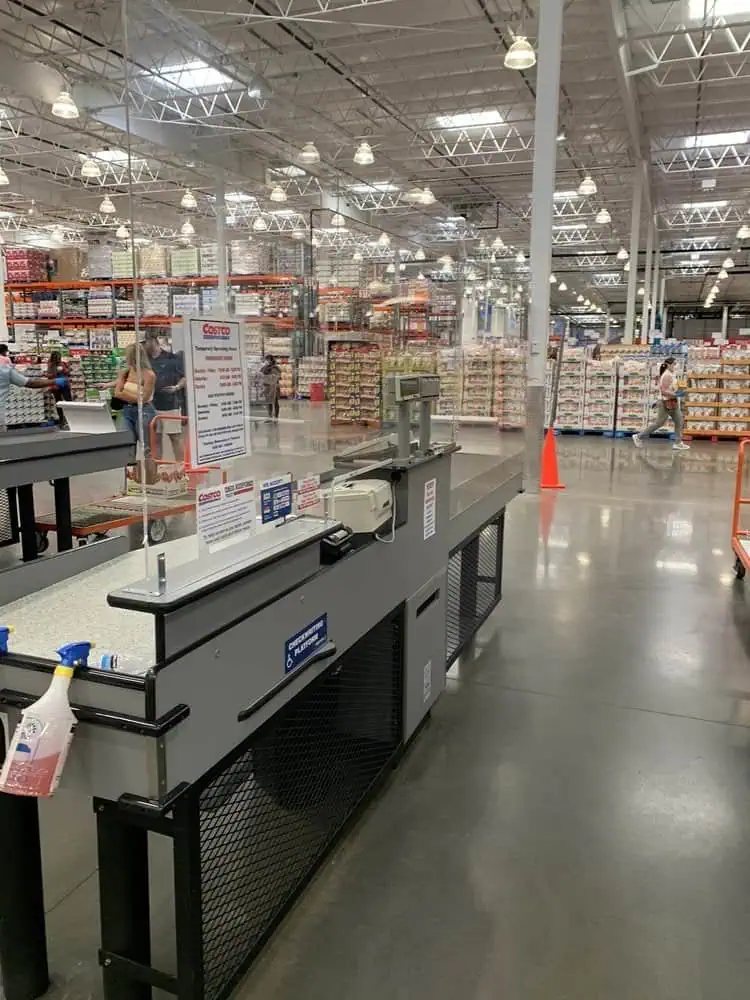
Any time I introduce a new course topic, particularly for my undergraduate students, I try to find something that they have experienced that will allow them to better understand the topic we are about to discuss. For the topic of inventory management, I typically bring up a trip to Costco (or equivalently, Sam’s Club or BJ’s Wholesale Club). I ask them about the benefits of shopping at Costco, and they usually discuss how it allows them to “stock up” on certain items so they will not run out of them, and that they pay a lower unit price because Costco charges you less because you buy in larger quantities. I tell them those are similar reasons that some businesses hold inventories: to prevent “stockouts” and to take advantage of “quantity discounts”.

However, we also discuss the downsides of a trip to Costco. First, when you return home, you realize that you need a place to store everything you bought. If you do not have a lot of excess space where you live, your purchases can encroach on your living space. This can also be a challenge for businesses who generate additional costs to store their excess inventory. Second, although you may have saved money on your purchases at Costco, your money is now all tied up in those items, and you have lost the opportunity to use those funds to pay down debt or be “invested” elsewhere. Businesses experience this same issue given the opportunity cost of tying up its funds in inventory.
The example of a trip to Costco gives us some very good insights into the pros and cons of holding inventory and provides a launching point for diving deeper into three key points about managing inventory:
- The tradeoff between customer service/meeting demand and higher inventory holding costs
- Importance of always knowing your inventory status and the technologies that will track your inventory
- Determining where to hold/who holds your inventory
Before we begin our dive into these three points, allow me to clarify what I mean when discussing inventory. While inventory can mean any goods that we can stock or store, we will focus our examination of inventory management primarily on “finished goods”, the end products made by a manufacturer and/or sold by a retailer, and on the raw materials or parts that go into making finished goods. Those raw materials and parts are crucial inventory items because products cannot be manufactured without them. In service businesses, we will only consider the inventory needed to deliver the service, such as linens for hotel rooms and the food to be prepared for restaurants. Given that perspective of inventory, here are the key elements of inventory management:
Trading off customer service/meeting demand with inventory holding costs: This is one of the most classic inventory management decisions. If a customer comes to you to buy a product and you do not have it available, that customer will likely go to a competitor for his/her purchase, and at a minimum, you lose the gross margin you would have earned if you had the product available. However, such a “stockout cost” might be even higher. That customer may choose not to return for future purchases (more lost revenue) and may share his/her experience with others either individually or broadly through social media, putting even more future revenue at risk. So, the cost of a stockout can be substantial, particularly if you consider your customer service as a differentiator.
However, as we saw with the Costco example, there are various costs associated with holding inventory, and there are others not mentioned in the example. In the example, we highlighted the cost of storing inventory (which can include the cost of buying/renting space, utilities, warehouse staff salaries, and equipment) and the cost of capital tied up in inventory (which includes interest on debt and/or opportunity cost). However, in the example, we did not discuss the risk costs of holding inventory, which include “shrinkage” (theft, loss, damage) of inventory and potential perishability or obsolescence (e.g., outdated technology) of the inventory. So, when deciding on how much inventory to hold, you must make that decision by comparing stockout costs versus inventory holding costs and also how you compete in your markets. If you compete on customer service, you are much more likely to hold extra inventory than if you compete on cost.
Tracking Inventory/Technologies: In order to make the best inventory decisions, it is important to have timely and accurate information on your current inventory status. When I worked as a stockboy in a women’s clothing store more than forty years ago, the only way for us to know our inventory was to physically count it on a day the store was closed. Now, we have technologies that can allow us to track inventory in real-time, such as point-of-sale (POS) systems, universal product code (UPC) and stock-keeping unit (SKU) scanners, and we also have radio-frequency identification (RFID) technology that also indicates the location of the inventory. The more you know about how much inventory you have, the easier it is to manage so that you can minimize stockout and inventory holding costs.
Where do you hold/Who holds your inventory? In the past, this was not a relevant question. It is now, because most firms have supply chain partners, and we may choose to have one of our partners hold our inventory. Since next week’s lesson is on the “Essentials of Supply Chains,” I will defer this discussion until next week; hopefully, providing you with motivation to come back for next week’s lesson!
That’s it for class today…..See you next week!