
As already reported here in ABD, June employment in the Augusta Metropolitan Statistical Area (MSA) fell by 300, the first decline since February. But how did other labor market indicators fare in June? How do earnings in Augusta compare with other cities?
The unemployment rate fell to 4% from 4.2% in May. This is the lowest unemployment rate since June last year. The employment level can fall while the unemployment rate also declines because those who lose their jobs are no longer looking for work or took jobs outside the MSA.
The good news from the labor market was that the labor force in the MSA has been growing consistently since August last year (see chart below).

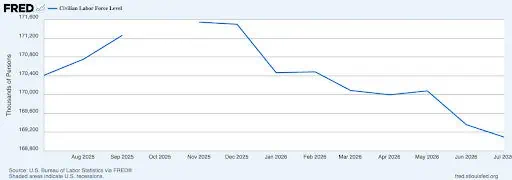
The increase in the labor force is especially good news considering the decline in the labor force at the national level over the last year. Several causes of this decline have been suggested, including lower immigration, an aging population, and a statistical revision by the Bureau of Labor Statistics in January.
Average weekly earnings fell by $24 in June to $1271.50. Since breaching the $1,200 level in October 2025, earnings have been quite variable.

I gave a presentation to the Augusta Metro Chamber of Commerce a few weeks ago, and a participant asked how earnings in Augusta compared to the national average. For the past decade, earnings in Augusta have underperformed the national average but in the last six months have been very similar (see graph below).

The national jobs report for July was weak, with job losses in July and downward revisions to May and June data. We will find out if Augusta suffers a similar weakness in a couple of weeks.