

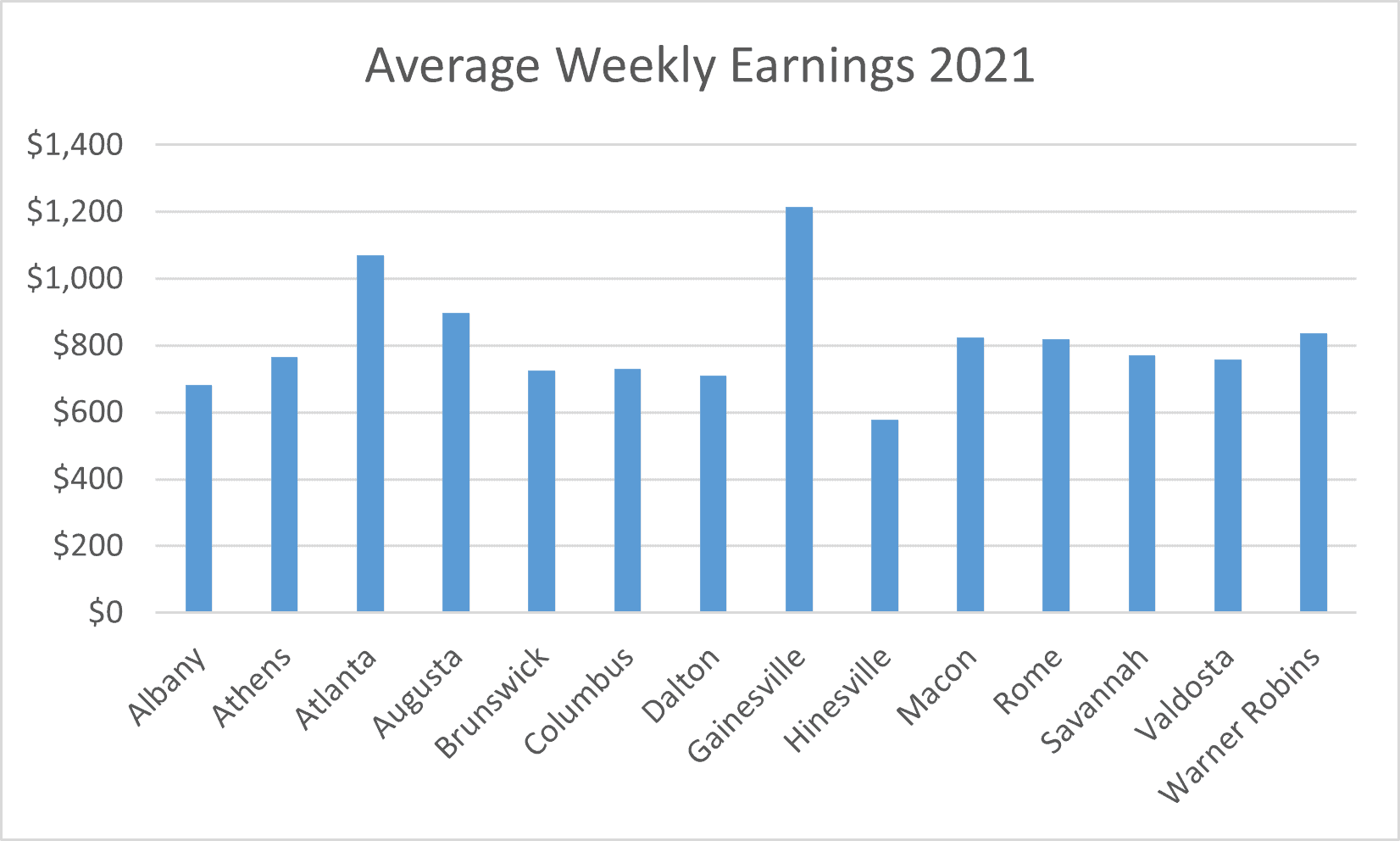
The average weekly earnings in the Augusta Metropolitan Statistical Area (MSA) in 2021 was $898. In Atlanta, it was $1,070 and just $682 in Hinesville (see the first chart).
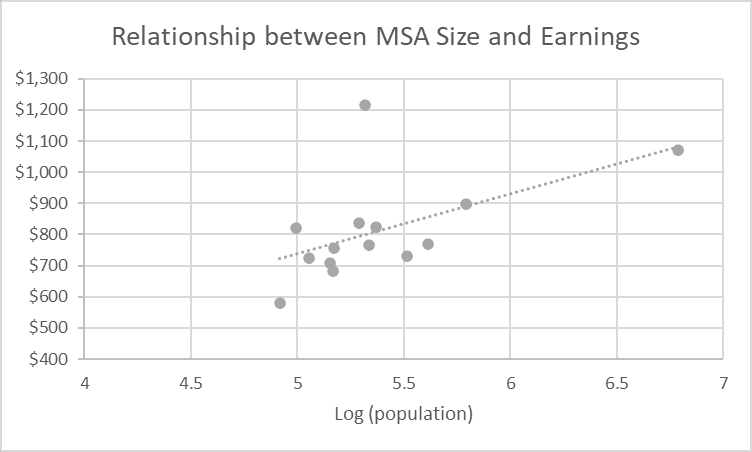
In fact, there is quite a clear relationship between the size of MSA, as measured by population, and average weekly earnings (see the second chart). The line of best fit is clearly upward sloping, showing the positive relationship between population and earnings.
Why do workers earn more in larger cities than their colleagues in smaller ones? A new paper by Theodore Papageorgiou (found here) provides some answers to this puzzle.
Papageorgiou finds, using national data, that larger cities have more than 450 occupations compared to 200 occupations in smaller cities. This greater variety of occupational choices allows workers in big cities to try different occupations before eventually finding the one that best meets their skills and interests. Workers are more productive in this occupation and earn more money than they would be settling for a suboptimal occupation in a smaller city with less choice.
Support for this hypothesis comes from observing that workers switch occupations more often in larger cities and that it takes time for them to find their ideal occupation and a higher wage. Overall, Papageorgiou finds that about one-third of the urban-wage premium can be accounted for by occupational matching.
The idea that the number of occupations is important is supported by Georgia data. According to the Bureau of Labor Statistics, there are more than 700 occupations listed for Atlanta, 460 in Augusta, and just 130 in Hinesville.
Interestingly, I find that in Georgia 31 percent of the variance in the earnings across MSAs can be accounted for by the population in those MSAs.