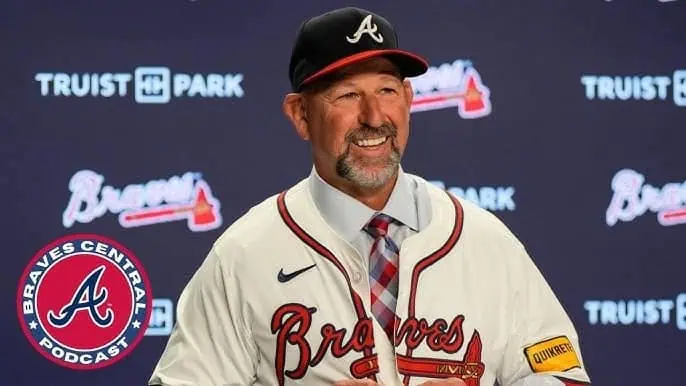
On Monday, the Atlanta Braves named Walt Weiss as its 49th manager in franchise history, taking over for Brian Snitker, who retired at the conclusion of the 2025 season after being the Braves manager since early in the 2016 season.
Snitker took over the Braves amid a team rebuild but helped quickly turn things around, leading the team to six straight National League East championships from 2018 to 2023, with an additional playoff appearance in 2024 and a World Series championship in 2021. Since 1901, only Snitker’s mentor, Bobby Cox, had more managerial wins in Braves franchise history.
So, when Snitker retired, the Braves franchise, and in particular, its President of Baseball Operations and General Manager, Alex Anthopoulos, who was responsible for finding Snitker’s successor.
How Baseball Mirrors Business
Such a dilemma often faces businesses as well, when a successful leader retires or otherwise leaves the company. The Braves provide an excellent example of how to do “succession planning” by building an excellent “bench” of potential replacements internal to the franchise, while being open to other candidates who either had Braves franchise ties or would inject a new perspective from outside the organization. In today’s column, we will see how the Braves’ succession planning to replace Brian Snitker is a good model for any business who may have to replace a successful leader in the future.
The first step in any succession planning, whether in business, sports, government, or other organizational types, is to determine which positions are critical and at risk of being vacated. For the Braves, while there are other important positions, the most critical are manager, the position most recently held by Snitker, and the leader of baseball operations, currently held by Anthopoulos. For most businesses, these positions would include most C-Suite positions, such as Chief Executive Officer (CEO), Chief Operations Officer (COO), and Chief Financial Officer (CFO), but depending on the company and how it competes, there can be other vital positions, such as their top technical/engineering people and/or their top salespeople. It is up to each company to determine which positions are most critical. Beyond just identifying the positions themselves, it is very important to identify and define the core skills and competencies needed for each of those roles.
Once the key positions and their skills/competencies are identified, probably the most important aspect of succession planning is identifying and developing internal successors. In the identification process, it is not only critical to identify who might be ready to step in right now, but also to identify who might have the potential to step in further into the future. While you are looking for people with the skills and competencies you identified in the previous step, you are also looking for those with either the current ability or potential to lead. In most cases, success in these positions is not solely dependent on a functional skill set, but also on the ability to lead teams and groups. It is critically important to remember that those you choose for successors are likely not “finished products,” so they will need to be further developed. There are multiple ways to do this development, such as education and training, mentorship, and, probably most importantly, through a progression of positions with increasing responsibility.
Passing the Torch To Your Next Leader
The Braves did a great job of creating a potential internal pipeline to succeed Snitker. Weiss, who was ultimately selected, had previous experience as a manager with the Colorado Rockies, but was also a former player for the Braves and Snitker’s bench coach (a manager’s “right-hand man”) for the past eight years. This gave him great insight into the “Braves Way” of doing things, and as a bench coach was involved in many of each game’s tactical decisions. In addition to Weiss, the Braves also positioned their bullpen coach, Eddie Perez, as a potential successor and brought Fredi Gonzalez back to the Braves organization as a third base coach with significant managerial experience with multiple teams, including the Braves.
In addition to your internal candidates, you always need to also be aware of who might be available outside of your organization. Whether it is through executive search firms, professional societies, or analysis of your competitors, you should be aware of potential successors who are external to your company, including those who may have previously worked for your firm. Some of the Braves’ external candidates included David Ross, the former Chicago Cubs manager who previously played for the Braves, and George Lombard and Ryan Flaherty, former players in the Braves organization who are currently highly thought of bench coaches for the Tigers and Cubs, respectively.
Once you have gathered your list of internal and external candidates, it is not time to relax. You need to consistently develop your internal candidates and monitor your external candidates. You need to regularly review and update your list to reflect any changes in your needs and/or candidates.
Every organization needs to be ready with its succession plan because a leader can be lost unexpectedly or expectedly at any time. As Brian Snitker reached age 70 and decided to retire, Alex Anthopoulos needed to be ready to put his succession plan in place.
There is no guarantee that Walt Weiss will be successful as the next Braves manager, but they developed a well-thought-out plan. It led to Weiss, whom the Braves think will succeed. Be sure that your organization has a similar plan.