Publisher’s Note: Did you watch the “game within the game” on Sunday—no, not Bad Bunny’s halftime performance—rather the performance of the commercials. I checked locally and: 30-second commercials cost about $8,500 each on our NBC affiliate, WAGT. Our resident “supply chain” expert, Dr. Rick Franza, looked at the supply, demand, and multi-million dollar cost/benefit.
First, allow him a little “Broadway Joe” runway!
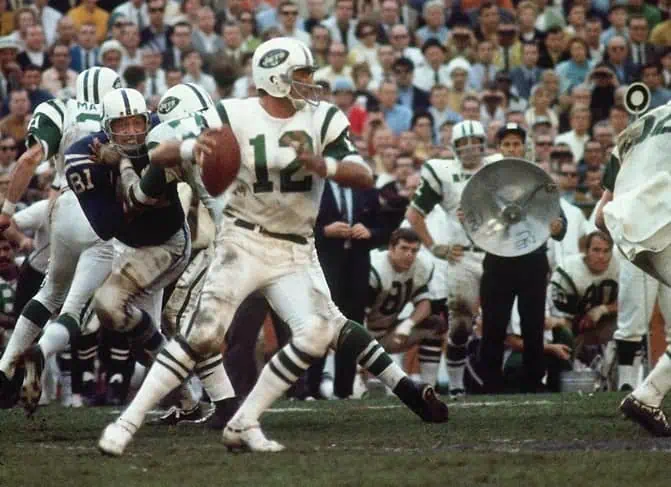
RICK: I have always been a big fan of the Super Bowl. As a young boy growing up on Long Island, my fondest Super Bowl memory is Joe Namath guaranteeing the New York Jets’ upset win in Super Bowl III. Mostly, my Super Bowl fandom has to do with football itself; however, starting in 1984, there was another good reason to watch the Super Bowl: the television ads. That was the year of the iconic Apple advertisement that started making Super Bowl ads “must-see TV.”
For viewers, these ads are mostly about being entertained. For instance, a favorite of mine was a Volkswagen ad from 2013 that always “turns my frown the other way around.”
However, for companies investing large sums of money (see below) in Super Bowl ads, these commercials are serious business.
Just because an advertisement, particularly one shown during the Super Bowl, is funny, entertaining, and/or clever, it does not necessarily mean it is effective; and by effective, we mean that the advertisement results in increased sales, revenues, and profits.
A company that chooses to purchase advertising time during the Super Bowl is making a significant investment.
When Apple aired its iconic advertisement in 1984, the cost of a 30-second commercial during the Super Bowl was $300,000 (equivalent to $900,000 in today’s dollars). So, Apple’s 60-second ad cost the equivalent of $1.8 million in 2026 dollars. For this year’s Super Bowl LX (#60 for you non-Romans!), a 30-second ad costs the purchaser $8 million just for that airtime, approximately 9 times higher than it cost in 1984 in 2026 dollars. However, to fully capture the cost of a Super Bowl, one must also consider the costs of creating and producing the ad, along with casting costs. Therefore, the total cost of Super Bowl commercial can range anywhere from $9 million to $20 million. That is a large investment which begs the question: Is the juice (return) worth the likely seven-figure squeeze?
At first blush, it looks like it should be. Viewership in the United States for Super Bowl LX has been estimated at 125 million. While that represents about 35 to 40 percent of the population, it is estimated that about two-thirds of all adults watched the game. Importantly, the audience is well balanced among males and females and attracts high viewership in all age groups, particularly in households with higher incomes. The Super Bowl is one of those rare instances in this era in which advertisers can capture pretty much all demographics. Now, let’s look at how those eyeballs translate into more meaningful business statistics.
Broadly speaking, advertising in the Super Bowl provides companies an average return of $5.20 for every dollar spent on their ad (including production costs). According to market research firm Ipsos, the top Super Bowl ads increase brand awareness by 30-60%, purchase intent by target market by 25-45%, social media engagement by 200-500%, website traffic by 300-1000%, and search volume by 400-800%. The key question to ask next is: What is the most important characteristic of the top ads, and how does it apply to those of you who do not have the marketing budget to advertise on the Super Bowl telecast?
While viewers tend to be enamored with the ads that “tug at their heartstrings” (e.g., Lay’s “Last Harvest) and make them laugh (e.g., Pepsi’s Polar Bear), and these are often the most memorable, they do not always sell more product. The reason for that is sometimes the ads we like the most do not give us a compelling reason to buy the product (though the Polar Bear does tell us that Pepsi Zero Sugar tastes better than Coke Zero). The most important characteristic of a successful Super Bowl ad, in which success is measured in increased sales, revenues, and profits, is one which provides a value proposition, a compelling promise why you should buy the advertised product rather than one from its competitors. Just a few examples of these during the 2026 Super Bowl included:
- Hims & Hers: Provider of affordable, accessible, high-quality prescription treatments
- Instacart: The ability to customize your choices of groceries (e.g., bananas!)
- Liquid I.V.: Demonstrating the value of hydration and how its product provides it
- Oakley Meta: Functionality of their smart glasses using AI to improve performance
- TurboTax: Maximum accuracy and ease of use for tax filing
- State Farm: Superior customer service compared to competitors
On the other side of the coin (pun intended), there was the Coinbase ad, which failed to show what Coinbase does or why someone might use it. The potential redeeming value of that ad is that it might motivate a curious viewer to explore Coinbase’s website to learn more, where hopefully, Coinbase provides its value proposition.
So, the Super Bowl “adscape” is a microcosm (or maybe a macrocosm) for all advertising. As you consider how to maximize your marketing advertising, be sure that your advertising gives your target market a compelling reason (i.e., value proposition) to buy your product and/or that it sends them to your website where your value proposition is obvious. Then, you will get the necessary juice from your advertising squeeze.