Publisher’s Note: Israel Ayettey was away at school in Macon when Hurricane Helene ripped through the CSRA. Here is his guest column on the spirit of our neighbors called “The Indomitable Spirit of Humankind.”
The wind howled through Augusta that night, rattling windows and uprooting trees like weeds in a garden. It was a night that we, the residents of Augusta, will never forget as long as we live.
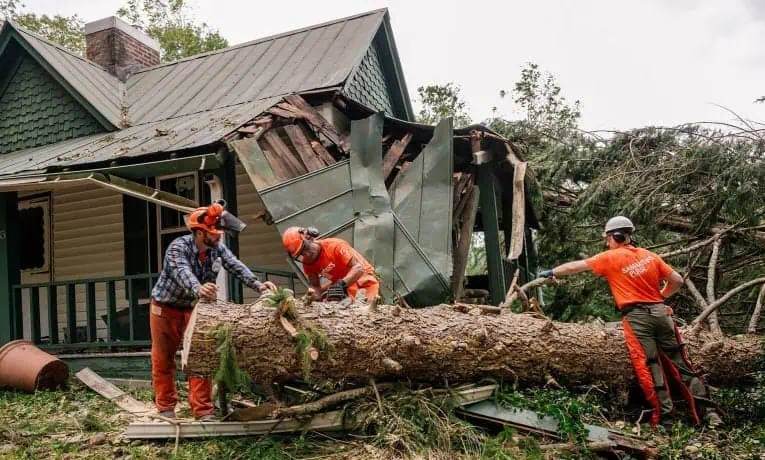
When the sun rose, so did our sorrows as we looked around at the destruction left behind. I’ll never forget seeing a family in my neighborhood sitting on the sidewalk, with one tree across their house and another stretched across both of their cars.
It was a tragedy. In those first moments, it felt like all we could do was wait and count our individual losses.
But just as the sun kept shining, so did the city of Augusta.
As the days passed, residents stepped outside with chainsaws in hand. Able-bodied neighbors cleared roads and driveways, often without being asked. Almost every night, someone knocked on a door — not to ask for help, but to offer it.
Sometimes it was food. Sometimes it was a place to sit and breathe.
This response was not isolated to one neighborhood. Across Augusta, people showed up for one another. The hurricane revealed something deeper than destruction: a shared sense of responsibility.
Augusta became a community where you didn’t just talk to your neighbors because they lived next door, but because you felt a sense of responsibility — and love — for them.
Biologists might suggest that fear and danger push people inward, toward self-interest. Augusta’s response to Hurricane Helene showed the opposite. Shared adversity can foster real community.
Scholars like Robert Sapolsky argue that humans are biologically predisposed to divide the world into “us” and “them,” especially in moments of stress and fear. In This Is Your Brain on Nationalism, Sapolsky explains how perceived danger activates primal systems in the brain that heighten group loyalty while increasing suspicion of outsiders. From this perspective, crises should intensify division, as people focus more on protecting “us” than caring for everyone else.
Augusta’s response to Hurricane Helene contradicts that idea.
Rather than withdrawing into isolation, the community flourished. People went out of their way to check on neighbors and share whatever resources they had. The hurricane created a collective vulnerability that shattered the mindset of “me and mine” and replaced it with “we and ours.”
Augusta’s experience suggests that while biology may incline humans toward separation, communities can overcome this impulse when suffering is shared, and empathy takes root.
While Sapolsky explains why fear often pushes people apart, Martin Luther King Jr. offers a moral framework for understanding why communities sometimes move in the opposite direction.
1 Robert M. Sapolsky, “This Is Your Brain on Nationalism,” Foreign Affairs, May/June 2019.
In Strength to Love, King defines a neighbor not by race, belief, or familiarity, but by need. “He is anyone toward whom you are neighborly,” King writes, “anyone who lies in need at life’s roadside.”
After Hurricane Helene, Augusta became one of those roads.
Residents did not ask who deserved help or who belonged. They simply saw neighbors in need and responded. Chainsaws, shared meals, and open doors reflected what King called “dangerous altruism” — the willingness to help even when doing so carries risk.
King describes this as a reversal of the central question: What will happen to me if I help? But what will happen to them if I don’t?
In choosing compassion over self-preservation, Augusta demonstrated that shared trauma can override biological instinct and transform fear into responsibility.
King’s idea of moral responsibility explains why people choose to help. But it does not fully explain how that help became so widespread, so quickly.
That is where David Brooks offers insight.
Brooks argues that strong communities are not defined by shared beliefs or physical proximity, but by what he calls the “density” of relationships — how often people show up for one another in tangible ways. In The Second Mountain, he explains that communities with strong social bonds respond to crisis differently. They do not wait for institutions or instructions. Neighbors become the first responders.
3 David Brooks, “The Second Mountain: The Quest for a Moral Life, (New York: Random House, 2019). 2 Martin Luther King Jr., “Strength to Love” (Minneapolis: Fortress Press, 2010).
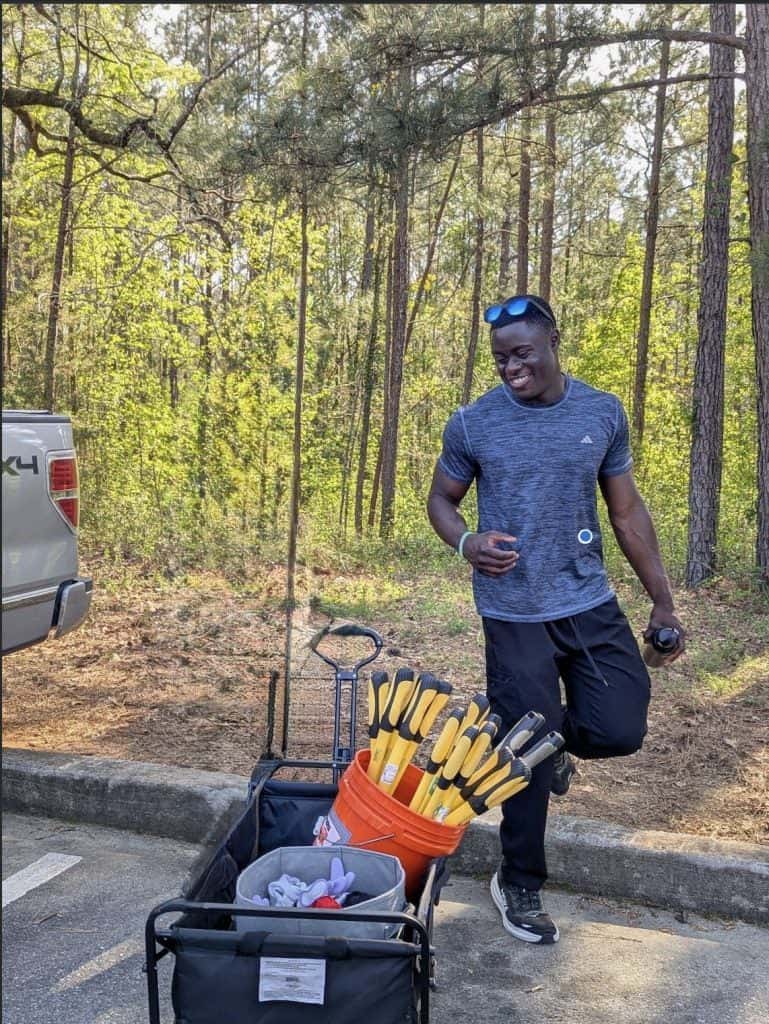
Hurricane Helene exposed those bonds in Augusta.
Daily routines disappeared. Social boundaries faded. Streets became meeting places, and front yards turned into work sites. People who had once exchanged brief greetings now shared tools and meals, having long conversations beneath damaged trees and darkened skies.
According to Brooks, moments like these do more than reveal community — they create it. Shared hardship compresses time. Relationships that might have taken years to form develop in days. Trust grows not from words, but from repeated acts of care.
Augusta followed this pattern. What began as individual kindness became a collective rhythm of responsibility. Checking on neighbors became routine. Helping was no longer an exception — it was expected.
The aftermath of Hurricane Helene forced Augustans to slow down. Power was out, routines were disrupted, and the boundaries between people faded. What filled that space was something unexpected: presence.
Neighbors checked on one another. Food and supplies were shared. Faces once unfamiliar became familiar. These actions were not ordered or organized. They were individual choices, repeated again and again.
Martin Luther King Jr.’s vision of neighborly love explains the moral impulse behind those choices. David Brooks’ understanding of social cohesion explains how those choices multiplied.
As the city rebuilds and life returns to normal, the greatest challenge for the city of Augusta is remembering what was learned in the dark. Crisis stripped away convenience and revealed connection, showing that community is not something we claim — it is something we practice.
If the city of Augusta holds onto that lesson, Hurricane Helene will not only be remembered for the damage it caused, but for the unity it uncovered.