Publisher’s Note: Georgia Power has a strong rebate program, and Studio Gordon LLC is considering it in the building ABD has a little space. The goal is to preserve energy. GP pays 70% of the costs for energy-efficient lighting/installation, and a local business pays 30%. The savings in your power bill will pay for the lighting upgrades in roughly a year. Dana Lynn McIntyre looks at the bigger picture in this report.
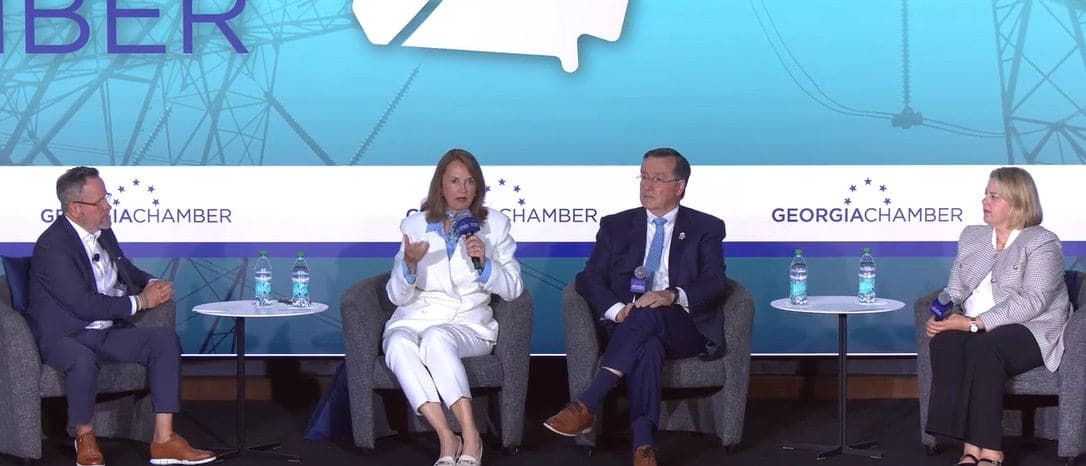
With the ever changing landscape for energy demands, the Georgia Chamber of Commerce assembled experts to examine what the state has and what it needs.
The 2026 State of Energy event dissected how energy policy, economic development, infrastructure needs, and long-term competitiveness intersect.
Chris Clark, president and CEO of the Chamber, said the energy summit is part of the multi-phase Georgia 2050 strategic plan. The five pillars focus on growing the state’s economy for the future.
One of those five pillars is energy and infrastructure, now and in the future.
“For most of our history, economic growth has followed infrastructure. First, we built out our communities and our businesses around rivers, and then railroads, then it was ports, highways, airports, electricity pipelines,” he said. “Here’s what we know: That the communities that are connected to the right infrastructure do well, they thrive, and those communities that don’t fall behind.”
Clark said energy may be the most critical issue for economic development, both for attracting new businesses and growing existing businesses.
Annalisa Bloodworth, President and CEO of Oglethorpe Power Corporation, said Georgia is currently in an enviable position. There is sufficient power to support the current needs; however, the state is not immune to changes in the market.
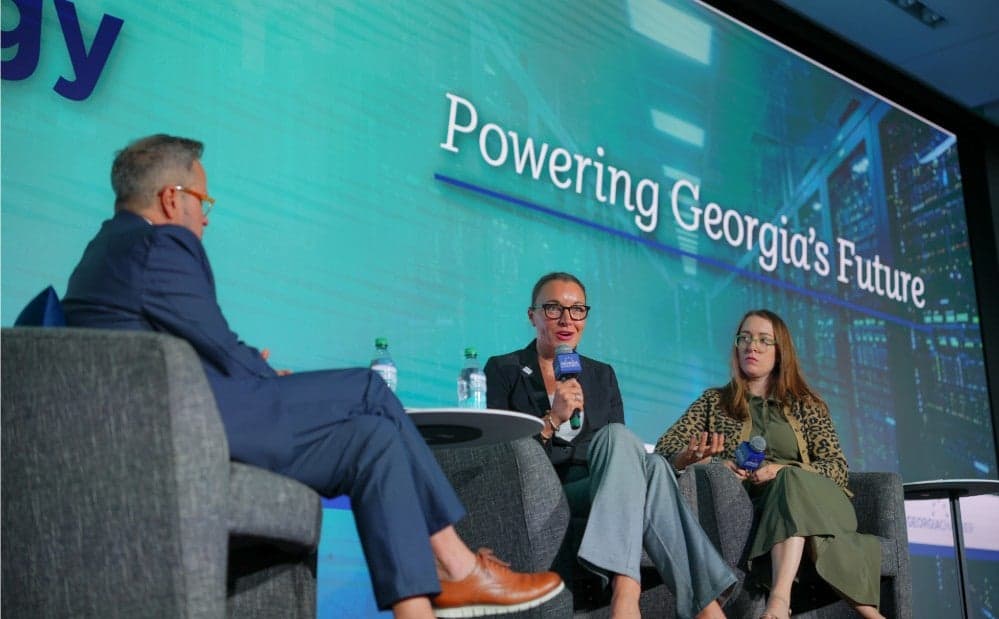
“We had nearly two decades of no growth in the demand for electricity in this country, and that was because products got a lot more efficient,” she said. “It basically stayed flat until the early 2020’s, and then it really took off in 2023-2024, and now all of the projections are for unprecedented increases in the need for electricity, so things are good, but it is absolutely not the time to be complacent.”
One of the reasons cited for Georgia’s positive outlook for energy needs was bringing Plant Vogtle Units 3 and 4 online. However, other energy-generating projects are also being built, including a solar facility in Wilcox County.
“We’ve got about 28 of our cities that are involved in this project, and it actually went commercial on May 15,” said Jim Fuller, President and CEO of MEAG Power. “It’s about 80 megawatts; it’s a power-purchase agreement for 15 years. The deal is we pay per unit energy cost, and if they don’t deliver, we don’t have to pay.
Fuller added that the project will improve MEAG Power’s amount of non-carbon-emitting production to 67%.
“So, in 2040, and this is assuming no massive data center flow growth, we should be about 90% non-emitting,” he reported. “We’re trying to keep cognizant of the best economic way to have non-emitting resources to supply our cities’ needs.”
Although the event was a wide-ranging look into the state of Georgia’s energy, it inevitably turned to an examination of the impact of data centers.
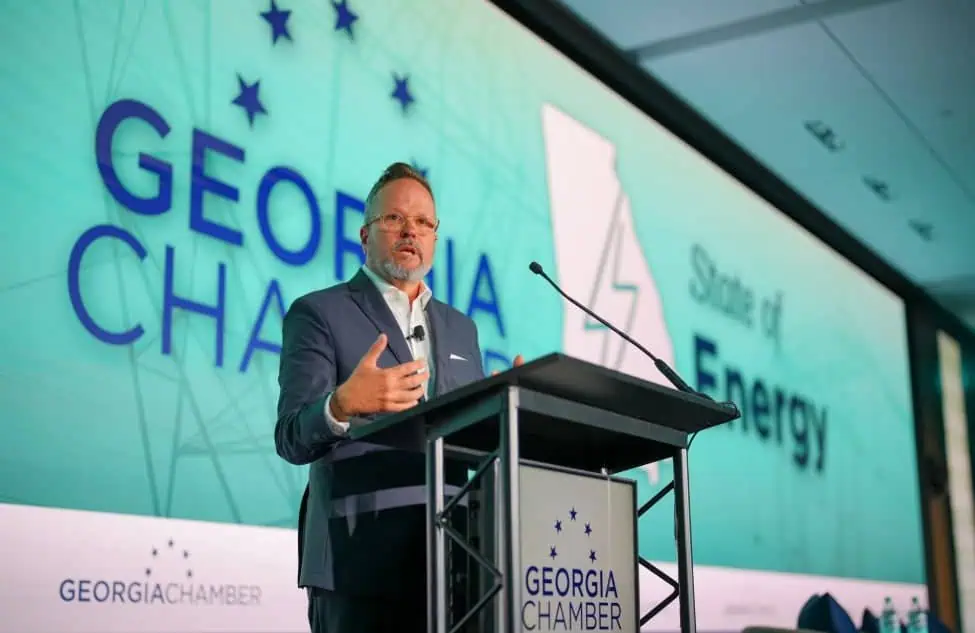
Clark kicked off the discussion by introducing his audience to a new term: Zettabyte.
“One zettabyte is about one trillion books, four billion iPhones, or 300 billion hours of video,” he said. “In 2015, the world generated about 15 zettabytes of data annually. Today it’s 180 zettabytes, that’s just consumer demand growing.”
For some regions, data centers are not new. Google opened a data center in Douglas County in 2017.
Katie Ottenweller, Lead of Energy Market Development for the U.S. Eastern Region at Google, said the company was attracted to Georgia because of its pro-business reputation. She said Douglas County was supportive of the project, but Google, and any company that wants to build a data center, must find a way to work with the county and its residents.
“Part of what we have to do, and this is part of our commitment to build data centers the right way, is to be a good neighbor from day one,” she said. “One of the things that we heard really early on in Douglas County was concerns about water usage. Our data center was right on the Chattahoochee River. We actually partnered with the county to help build a wastewater treatment facility on our campus, so that we could take gray water from the county, use that, recycle that water in our data center, and then put it back into the river cleaner than we got it.”
Ottenweller said there are important questions to ask for any community tapped for a data center. One of the first is to determine how the county and its residents will benefit from the center, and the benefit the center will gain in return.