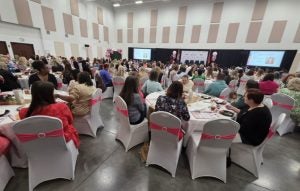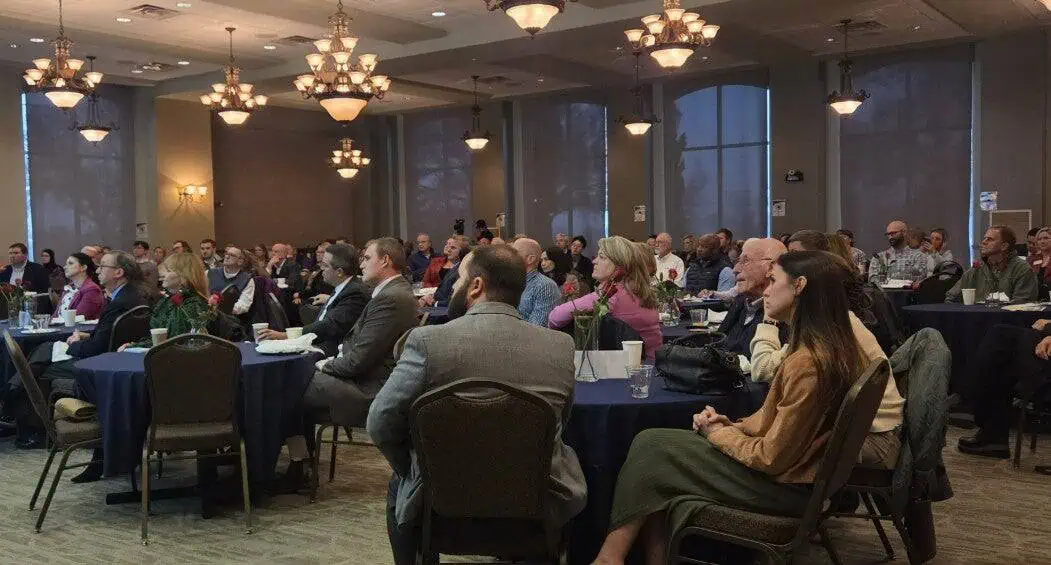
About 100 CSRA professionals, educators, and business students attended the annual economic forecast, unlike any other in the previous 17 years of the breakfast event.
Dr. Simon Medcalfe, Professor of Economics and Finance in the Hull College of Business, and a columnist for ABD, cautioned that there is no local economic data past Augusta, making it difficult to forecast for next year. However, it created an opportunity to look at long-term practices and how they can influence economic growth and development.
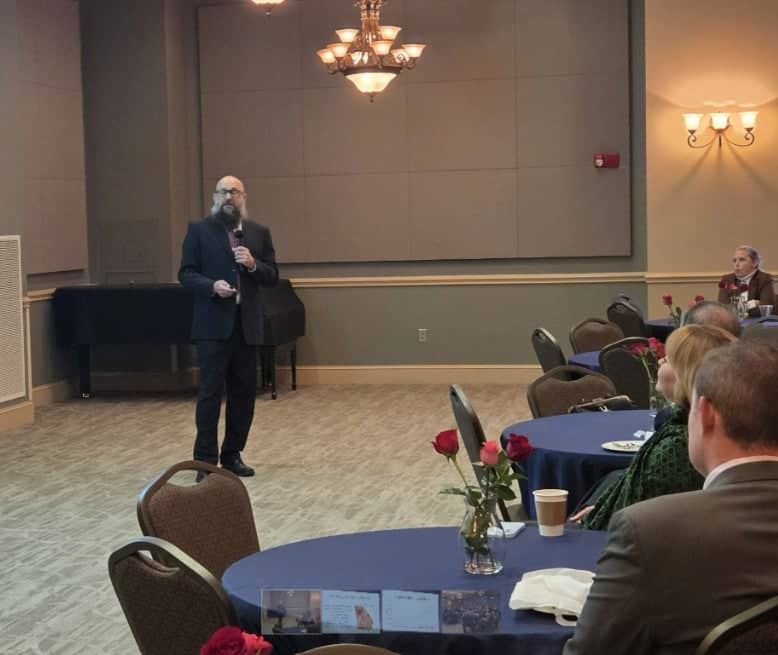
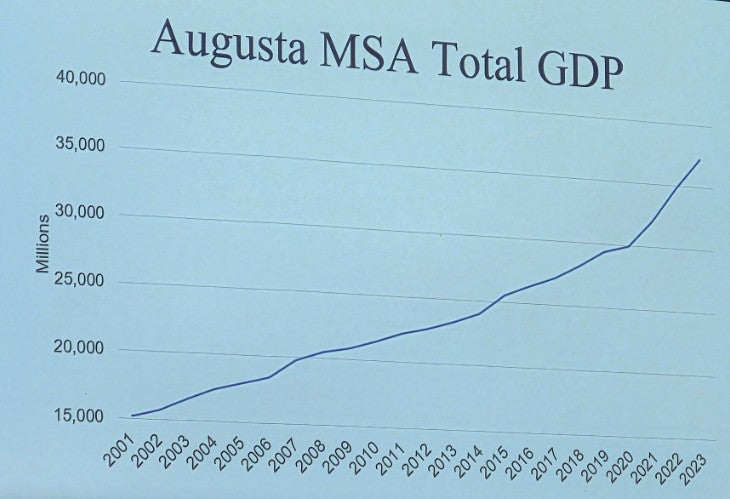
“When economists talk about economic growth, we’re talking about gross domestic product, which is the total market value of all final goods and services produced in the economy in a year,” he explained. “The gross domestic product for the Augusto metro area is running about $37 billion right now. The last quarter of a century or so, going back to 2001, the growth rate in the local economy has been about 1.5% per annum. It’s a little less from the national average, about 2.2%.”
Unlike many such events, which look at economic trends at the national, state, or regional level, this yearly forecast is Augusta-centric.
“You know, other forecasts are available, but they tend to be regional at best, or national,” he told ABD. “This is an opportunity for us really just to dig down into some things that really affect the Augusta economy, even down to the county level. So, that’s why we’ve always been doing that, and that’s the focus and our differentiator.”
Tabitha Hollimon, owner of Hollimon Strategic Advisors, LLC, said keeping the focus on what is happening in Metro Augusta helps business owners strategize for the coming year.
“We think about our next month, headed into a new quarter of the next year. Then we focus on the next 12 months with a strategic plan, whether that is to hire more people, maybe expand our operations, get new widgets in our door,” she said. “So, it is so important to forecast what we target. It starts with that because that’s why we go into business. We want freedom. We want to employ people who want to help economics.”
Medcalfe said one bit of good news is inflation is running about 3%, roughly a third of what it was in the summer of 2022. However, some of the inflation is attributable to tariffs, with some businesses facing 50% and 75% tariffs, which are then passed along to consumers.
He said current reductions in tariffs imposed on some countries will address some of the inflation, but uncertainty remains.
“There’s an uncertainty index over trade policy, about trade and what tariffs are or what they’re going to be,” he said. “Firms want to have some long-standing permanency to this policy. And if you’re waking up every morning and you don’t know whether tariffs are imposed or not imposed, if they’re going to go up or down, it’s hard to make plans, whether that’s for investments or whether it’s for employment.”
Hollimon said that means businesses will need to focus on revenue, their own bottom line.
“So, whether you’re in retail, hospitality, construction, the beauty and spa industry, it doesn’t matter what industry you’re in, you still have to monitor your cash flow, because cash is king, and cash speaks the same language, whether you’re regional or local,” she said. “We have to really focus on targets and goal setting. We want our targets to be realistic, to be measurable. We want to set a timeline, but then just also focus out to the five-year mark.”
Medcalfe said the economy will have a number of unknowns heading into 2026. The possibility of another federal government shutdown and what the Federal Reserve will do with interest rates will impact how the economy responds.
Wells Fargo sponsored the event.