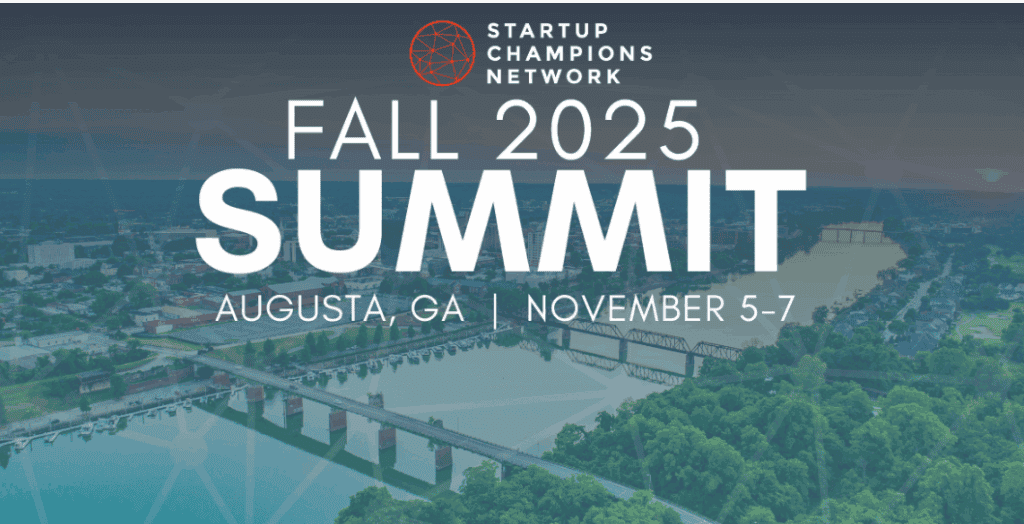
Publishers Note: Paul O’Brien posted this guest column on social media recently. ABD thinks it’s worthwhile to re-post in light of the fact a huge event is happening in Augusta in early November.
Paul is nationally renowned and has spent 25 years in advocacy, startups, and policy. Focused on public affairs, legislative strategy, media, coalitions, and business development. Background in Venture Capital (VC), economic development, polling, and communications.
In just a little less than a month, in Augusta, Georgia, the nation’s top startup ecosystem builders and national ecosystem support organizations convene to gain insight from real world case studies, and explore and experience new communities, against the backdrops of some of the nation’s top emerging ecosystems.
This is the time of year for everyone to head this direction, here in Texas, it’s startup season so amidst Dallas this week, San Antonio too, Houston again, and all that is going on Austin, I have the Startup Champions Network Summit calling.
Calling for more reason than the ideal time and place, which I’ll get into, I spent some wonderful time in Savannah, had extensive conversations with Atlanta, and between the two lies Augusta a leading startup ecosystem could emerge in time, with the major city to one side and one of America’s cultural epicenters to the other: a region of innovation which I’ll explore in a deep dive of Georgia soon. For now, in light of the coming summit, I thought I’d plant some seeds for everyone to explore together.
Cities Keep Getting Startup Ecosystems Wrong
If you’ve read The 6 Considerations of the Economic Development of Startups, you know that most communities approach their startup community as though they would typical economic development, workforce development, or community building. They build a new incubator, host demo days, and hand out innovation awards, hoping venture capital will take notice since local entrepreneurs say they’re struggling most with funding. It looks great in press releases but does almost nothing for the founders who are actually taking the risks because investors showing up with their hand raised in support doesn’t make up for the lack of what an ecosystem requires to develop entrepreneurs and opportunity.
What most are doing we’d call startup theater; a well-meaning show that distracts from the real work of ecosystem development: building trust, density, collaboration, and continuity.
Real startup development takes patience, data, and an understanding of what makes founders thrive. In How Startup Ecosystem Builders Start Ecosystems, we uncover what passion venture builders do differently in focusing a city on measurable outcomes, developing founder pipelines, and pushing connections between universities, investors, and industry.
Unpacking that is a conversation I expect is happening in Augusta and I’m not framing a criticism of the summit I want to share, I’m setting the stage for you all so that you appreciate why the people attending, conferences such as this, and honest discussion of what doesn’t work is so important – most cities are failing to effectively serve entrepreneurship.
Taking a Quick Look at the Summit
The Augusta Summit convenes the operators and ecosystem architects who are quietly doing the hard work of regional entrepreneurship. It’s hosted by the Startup Champions Network, a national peer network of entrepreneurial ecosystem builders, and organized locally by Make Startups, which, thanks to Grace Anne Belangia and Eric Parker, AIA, works to strengthen the organizations and ecosystems that support entrepreneurs so they can succeed anywhere.
This year’s agenda includes sessions on:
- Cross-border collaborationin regional ecosystem building
- Applied researchin founder support and community-centered investment
- Workforce developmentas a catalyst for economic mobility
- Creating a shared, nonpartisan languagefor policy change
- Sustaining ecosystem organizationswhile growing the next generation of leaders
It’s divided into focused tracks on Collaboration & Cross-Sector Innovation, Inclusive Entrepreneurship & Leadership Development, Research, Data & Systems Thinking, and Ecosystem Design & Capital Pathways (full agenda here).
And the speaker lineup is a who’s who of people I know and love, Cameron Cushman, Erika Haskins, Ren Mitchell, and Sheffie Robinson, MBA, PSM, CWDP, PMP®, to name a few, and many more we all need to know as well:
- Andy Stoll, Formerly of Ewing Marion Kauffman Foundation, now Executive Director of ESHIP Alliance, long recognized for advancing entrepreneurship ecosystems nationwide: Ecosystem Building As Emerging Profession
- Fay Horwitt, a Field Builder-in-Residence and founder of WayBuilders: Building Entrepreneurial Ecosystems from the Ground Up—with Relationships First
- Amy Beaird, Ph, The Engine’s advisor by way of Ecosystem Edge: Strengthening Entrepreneurial Ecosystems Through Collaborative Learning
- Kendel R., Multidisciplinary Marketing & Communications Innovator: Innovation in Tandem: Universities & Government at Work
From the Hearts Behind It All
To understand why this summit feels different, give this a read from Eric; his reflection on the work behind these communities, he wrote:
“Within every struggle we face is the germination of the next wave of transformation. Regardless of where we place blame for polarization, declining civility, and rising violence in our country (and the world), we can agree that we are caught in an intense struggle. With that great struggle, the optimist, nay the ecosystem builder, within me sees great opportunity to germinate something new. Our world needs our optimism and our collaboration more than at any other point in my lifetime.”
That’s what will set Augusta apart. While most “innovation” efforts chase grant dollars or ribbon cuttings, Parker and his team built theirs out of truly understanding the entrepreneur and the risks and challenges such people work to overcome, through sweat equity, trust, and a long view of what it takes to make a difference.
Five Conversations I Hope to See in Augusta
In my series of deep dives on startup regions throughout the world, I have five themes I’d hope to see discussed at the summit with some depth so they can be refined and championed; commonalities that I find remain underserved:
- Culture. Startup culture isn’t about murals, beer gardens, or slogans, it’s about behavior. Whether a city celebrates risk-taking and welcomes those who fail forward. You can’t build a startup city on fear of embarrassment.
- Immigration of Talent and Experience. Ecosystems stagnate without new inputs. Every community needs to invite in experienced founders and mentors from other regions. Innovation migrates; it doesn’t sprout in isolation.
- Breaking Down Silos. Founder Institute’s work in places such as Washington D.C.and Bellevue (in articles linked there where you can get a sense for my regional research) shows how progress happens when corporate leaders, government, and universities collaborate instead of competing. Silos slow down economies; alignment accelerates them. Reminder, I’m hosting a discussion of this on October 21st – details and registration here.
- Sector Strength from History. Great ecosystems grow from regional DNA. DefenseTech in Croatia, AgTech in Tulsa, logistics in Bentonville, these stories work because they’re authentic. Economic development isn’t about what you wantto be, but what you’ve already been good at.
- Celebrating Failure. Failure is how founders build experience and yet still, most cities stigmatize it. The best communities find ways to make failed founders mentors, turning scars into social capital.
The Room Where Startup Ecosystem Builders and Policymakers Speak
Why Augusta in November?
Seriously, because if we’re to break down the silos within cities, silos that capitalize on entrepreneurs and investors when instead we need collaboration and coalition between stakeholders to serve startups better, we can start by doing so ourselves – the economists, ecosystem builders, economic development professionals, and city leaders, who are genuine in support of innovation and creating opportunity. The future of startup-driven economic development is being built by people who measure success by jobs, opportunity, and equity, and if we do it wrong, the entrepreneurs pay the price.
“Entrepreneurship, both big and small, is the path to empowering the many. By scaling the ability of people to own their own means to make a living, we offer people the equity in our shared future; equity essential for a representative democratic republic.” – Eric Parker.
Register here for the Augusta Summit and join the builders redefining how cities grow entrepreneurship from the ground up.