In 2016, a blind man sued Domino’s Pizza because he couldn’t place an order using the company’s website or app. A federal court judge ruled against the pizza chain because its site wasn’t compliant with the Americans with Disabilities Act.
That legislation applies to not only large corporations but also your business, according to Mike Parsons.
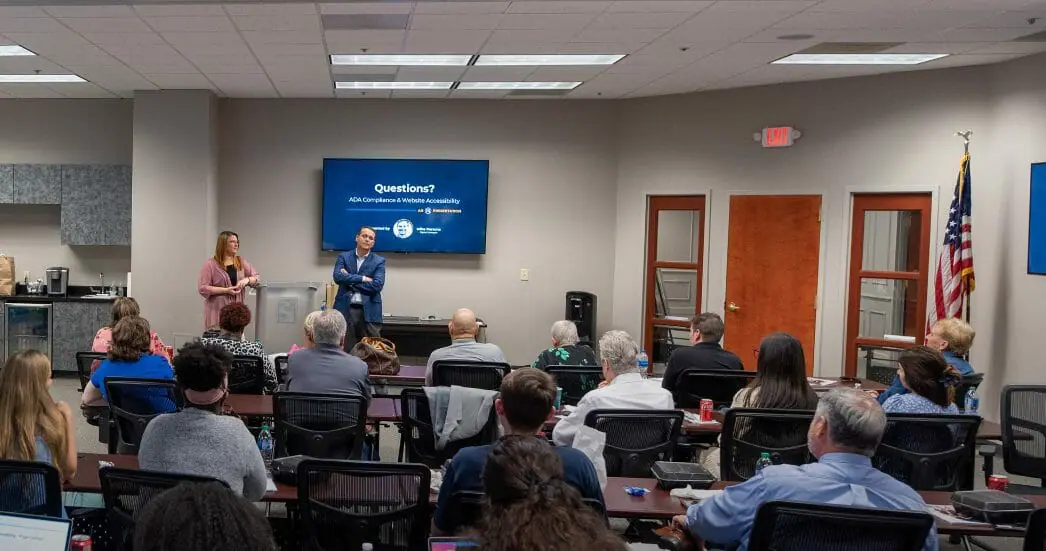
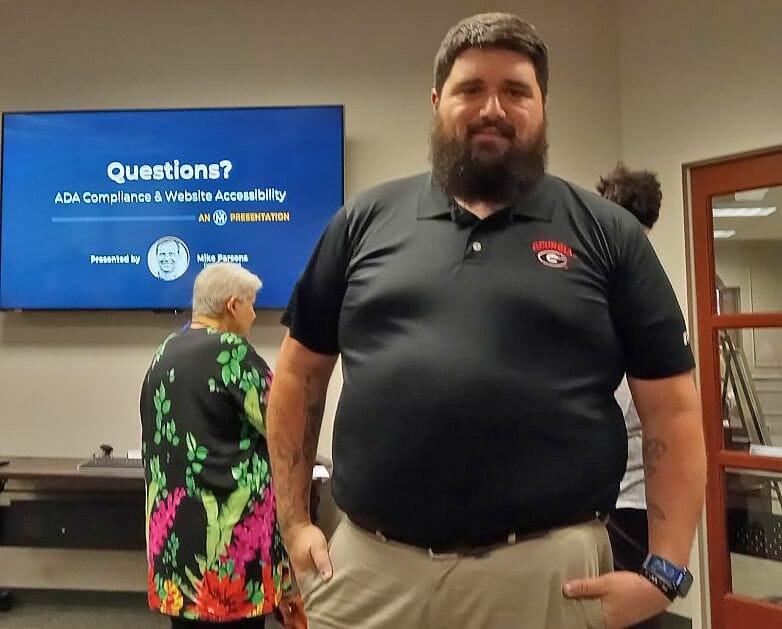
Parsons, digital strategist with M3 Agency in Augusta, and Ann Campbell-Kelly, Director of Development & Communications at Walton Options for Independent Living, discussed the importance of ensuring business websites are ADA compliant on Thursday, August 18 at the Augusta Metro Chamber of Commerce’s Third Thursday Business Builder.
Regardless of who builds a website, the business owner is responsible for ensuring compliance.
Parsons said the federal government has specific laws about building accessibility for those with disabilities, but that’s not the case for websites.
“There are no clear rules,” he said. “That makes things gray and vague.”
But he said many businesses, including one of M3’s clients, have been sued for compliance issues. That’s why the company has begun offering a software package that can analyze a site and grade its compliance. He showed an example of a website that the software graded as semi-compliant.
“Semi-compliant is still noncompliant,” Parsons said.
The software can also update a website to make it accessible for those with disabilities. For example, many sites show photos that can’t be viewed by blind users, but it can add an alt image tag that reads a photo’s details to the consumer.
He said the software won’t change PDF documents or videos. Several companies offer software that analyzes websites, and businesses that invest in that software may be eligible for tax credits.
Campbell-Kelly said it’s also important to pay attention to social media posts and use alt tags whenever necessary to ensure customer accessibility.
“It’s not your website, but it’s an extension of your business,” she said.
Campbell-Kelly said ADA compliance is important for creating an inclusive business culture, which makes it easier to hire and retain employees. In the United States, one in four people has a disability, but in the CSRA, that number is one in three.
Many people need reasonable accommodations to apply for jobs and complete the hiring process. She said companies often believe these accommodations will be too expensive, but they’re an investment that can make employees feel valued.
Logan Eason, website manager for Beazley Realtors, said his company has already invested in compliance software.
“It was great to have the interactions with the other businesses and hear their questions, which I can take back to my company,” Eason said.
For more information, contact acampbell@waltonoptions.org or Mike Parsons at 706-651-0053.