My colleague and fellow columnist at Augusta Business Daily, Rick Franza, loves a good sports analogy. So, as we enter the final straight of the 400-meter race that is 2026, which Georgia metro area is coming off the bend ahead? Read more to see how well Augusta does.
Using the Labor Market Index (LMI), Savannah has put clear daylight between itself and second-place Augusta, which has opened up a small gap over third-place Hinesville. Dalton and Warner Robins bring up the rear.
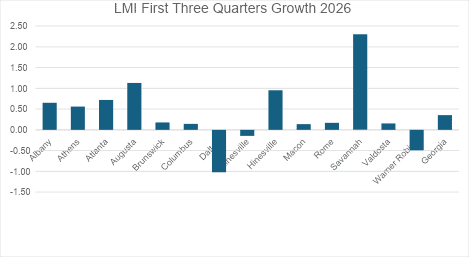
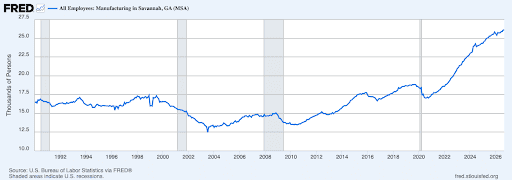
In the first three-quarters of this year, Savannah has added 500 jobs and seen the unemployment rate fall 0.2 percentage points to 2.8%. The labor force has grown by over 4,500, and hours worked increased by almost 2 hours. Average weekly earnings increased by $51. Employment in manufacturing has increased by about 9,000 since the COVID recession. This is symbolized by the new Hyundai factory you may have seen driving down I-16. Some of my students who work in manufacturing companies locally have said this new plant has really impacted their ability to recruit engineers and other production workers. Manufacturing employment in Augusta is unchanged from January but did rise through April before falling back.
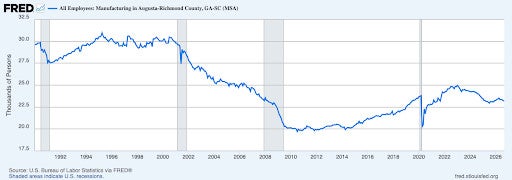
In Augusta, employment has grown 300 and the unemployment rate has fallen 0.5 percentage points in the first nine months of the year. The labor force has grown as much as in Savannah, but earnings increased by less ($25) and hours worked were up 42 minutes.
Although employment in Dalton has increased and unemployment fallen, all the other components of the LMI deteriorated in the first three quarters. Across Georgia, employment and the labor force are up and unemployment down. Hours worked are essentially unchanged (6 minutes), and average weekly earnings have fallen by $3.
Can Augusta catch Savannah down the final straight? The gap may be too large to make up in three months, but there is an opportunity to consolidate and take home the silver medal.