Our paychecks are far out-pacing inflation in Augusta. It’s not even close.
Employment has grown by 100 since August 2025, and the unemployment rate has fallen from 4.2% to 3.9%. The unemployment rate is the lowest since March 2024. The labor force, those in work and those seeking work, has grown by almost 6,000 people in the last year. Hours worked is the only labor market variable that decreased from August 2026, down 6 minutes.
Average weekly earnings in the private sector increased by $153 from August 2025 to a record $1321.49 in August 2026, an 11.6% increase. On average, earnings have outpaced inflation during the past 12 months. Earnings are up 13 percent while prices are up 3.4 percent.
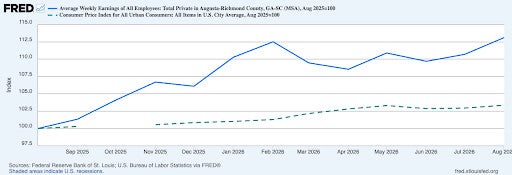
Average earnings can mask differences at different income levels. By definition, some workers’ earnings will rise faster than average, and some will rise by less, or fall. Similarly, the inflation rate is calculated based on the spending of an average urban household. An individual person’s expenditures may be above or below this average depending on the types of goods and services they buy. Unfortunately, there is no good measure of earnings growth across all income levels at the local level. Nationally, Bank of America released data for August indicating that annualized wage growth for low-income workers was 4.7% compared to high-income workers at 3.5%.
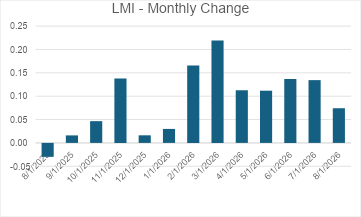
The Augusta Labor Market Index (LMI) increased by 0.1 percent in August. This is the twelfth straight month of expansion, and the index is 1.2 percent higher than a year ago.