A common fear among business owners is protecting their finances against fraud. An expert representing a CSRA bank branch shared ways fraudsters take business assets and simple steps to prevent it.
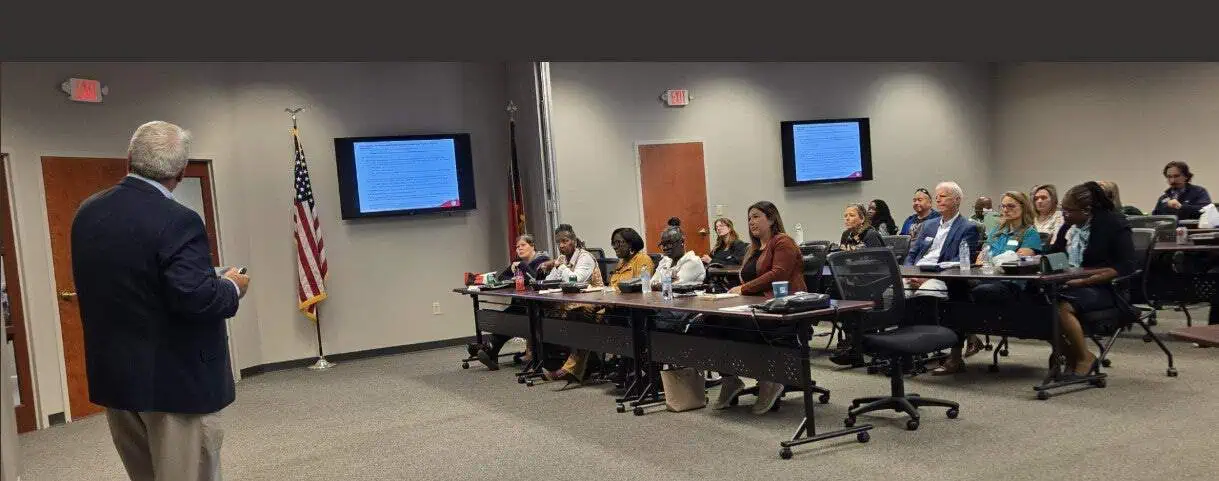
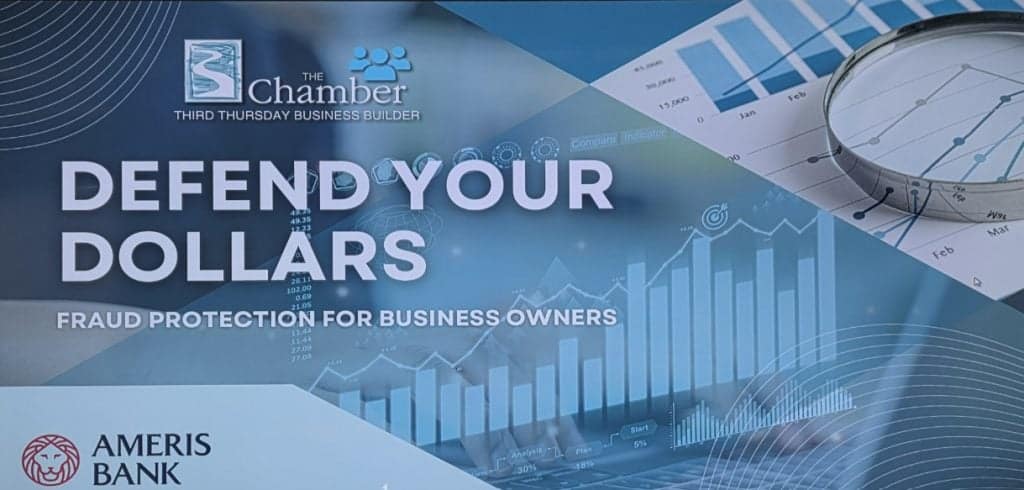
Kerry Huettner, SVP, Treasury Management Officer with Ameris Bank, was the speaker for the Augusta Metro Chamber of Commerce’s final Third Thursday Business Builder program for 2025.
Huettner has been in the banking business for 25 years. He said it used to be that he would talk with a customer about fraud once a month. Now it happens multiple times a week.
“And there are some days that I have multiple conversations in one day. So, it is on the rise,” he said. “It is something that we’re very concerned about for that reason. We want to be able to get out in our communities and talk about fraud. We want to be able to show you some red flags to let you know what to look out for, in hopes to keep you from becoming a victim of fraud.”
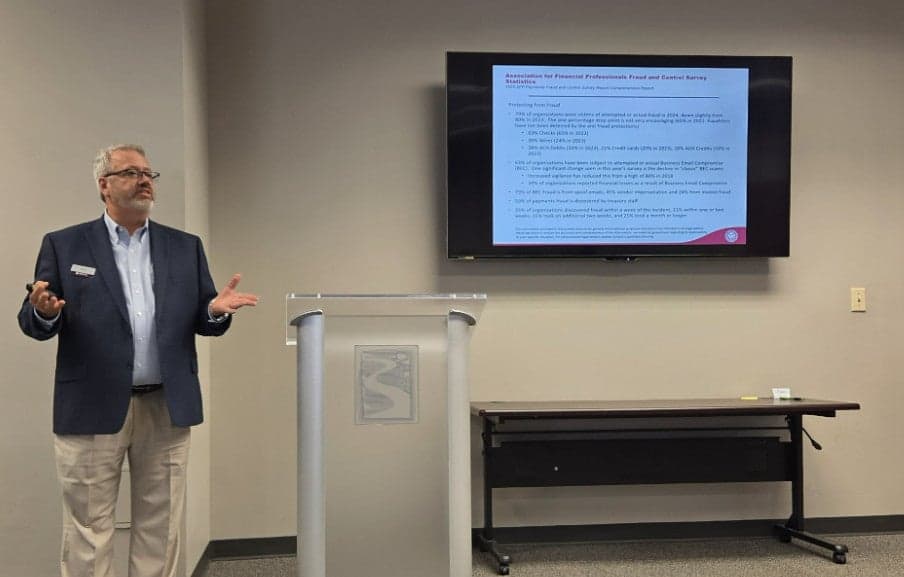
Using a survey done by the Association for Financial Professionals, Huettner said 79% of businesses were victims of fraud or attempted fraud. Checks were responsible for 63% of fraud in 2023, followed by wires at 30%. He said 63% of businesses have been the target of actual or attempted business email compromise.
“Vigilance has reduced this from a high of 80%, but those numbers are a little misleading, because what we see in business email compromises is that fraudsters are good one year, we get smarter the next year, so the numbers drop down, and then they get smarter,” he explained. “We’re in the dip right now. Let’s hope that continues to slide. But the reality is, with AI, we think that the numbers are going to grow.”
He said one of the growing threats is through what he called “social engineering,” which is a series of ways hackers try to gain access.
One of the most common threats, phishing, is not new, but still a threat to companies that conduct any portion of their business via email.
“What’s the goal for the fraudsters? Huettner asked Chamber members. They’re wanting to provide a fraudulent email that appears to come from a trusted source, and the goal is to trick the users into clicking malicious links or giving up login credentials,” he said.
In addition to phishing, there is now vishing, which is a phone call pretending to be a vendor or tech support. He said even what appears to be a legitimate incoming call may be a hacker using a spoofed number.
“Banks get spoofed as well, so you might get a phone call that might say that it’s from your bank. Don’t trust it,” he advised. “Just know your bank is never going to call you and ask you for your user ID, your password. They’re not going to ask for that vital information from you.”
He added that there is also smishing. That is trying to gain access with a text message.
Huettner provided workshop attendees with a list of recommended steps to mitigate the risk of falling victim to fraud. High on the list is for every business to have a fraud plan. It tells employees how to interact with incoming emails and calls. Then routinely test the plan with simulations and drills.
While Huettner provided advice on how to protect the business, he said it all comes down to just two words.
Be skeptical.