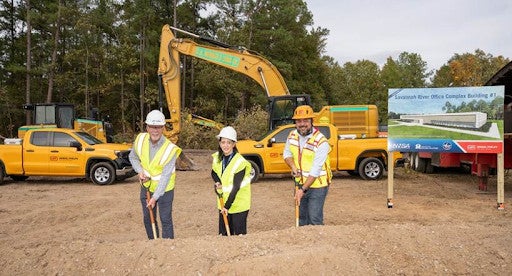
Jeff Griffin, SRNS President and Chief Executive Officer; Betty Huck, Manager of the National Nuclear Security Administration Savannah River Field Office; and Courtland Creech, Hensel Phelps Operations Manager, participate in the groundbreaking ceremony for the Savannah River Office Complex building.
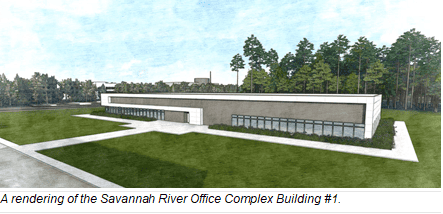
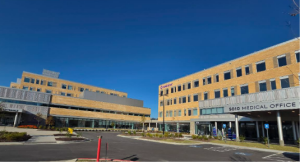
Groundbreaking occurred recently in the Site’s H Area for the new 22,000 sq. ft. facility that will provide permanent office spaces for personnel supporting the Savannah River Tritium Enterprise Environmental Management Operations and other mission activities. It will replace end-of-life modular office trailers with modern, reliable workspaces designed to meet the Site’s evolving operational needs.
“Restarting production is not simply a matter of turning systems back on,” said Jeff Griffin, SRNS President and Chief Executive Officer. “It requires rebuilding capabilities, replacing aging infrastructure and constructing new facilities that support today’s operational demands on a fast-paced timeline.”
The project comes as SRS expands its national security mission portfolio and prepares for sustained workforce growth. Looking ahead, the SROC design will provide a repeatable approach for developing mission support facilities needed to execute major construction projects, including the Savannah River Plutonium Processing Facility (SRPPF), HB Line restoration, and the Tritium Finishing Facility. SRPPF recently received NNSA approval of Critical Decision-2/3, authorizing the project to proceed with full-scale construction.
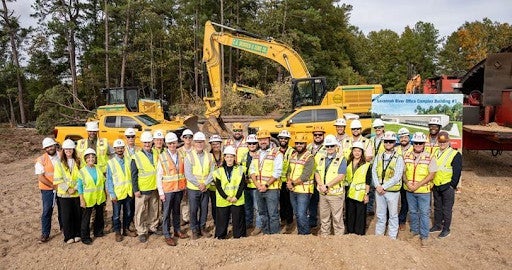
Personnel from the National Nuclear Security Administration, Savannah River Nuclear Solutions, and construction partner Hensel Phelps gather to celebrate the start of construction on the Savannah River Office Complex building.
SROC is the first facility to be delivered through SRNS’ Standardized Acquisition and Recapitalization, or STAR, design-build model. The approach is intended to accelerate delivery of lower-risk, non-nuclear support facilities by applying standardized designs, engaging construction partners earlier, clearly defining requirements, and reducing unnecessary review cycles.
Designed to meet NNSA’s commercial delivery target of less than $1,000 per square foot, the facility will provide improved workspaces while meeting rigorous safety, security, and reliability requirements. SRNS expects the STAR model to improve schedule predictability, increase industry participation, and reduce labor costs by an estimated 30%–45%, redirecting those funds toward mission-critical investments.
“This project showcases SRNS’ innovative commercial construction strategy, which is streamlining the delivery of lower-risk, non-nuclear facilities at SRS,” said Andy Tisler, SRNS Senior Vice President, Infrastructure Modernization and Sustainment. “By engaging contractors earlier, defining requirements more clearly and reducing unnecessary reviews, SRNS is creating a more efficient project delivery model.”