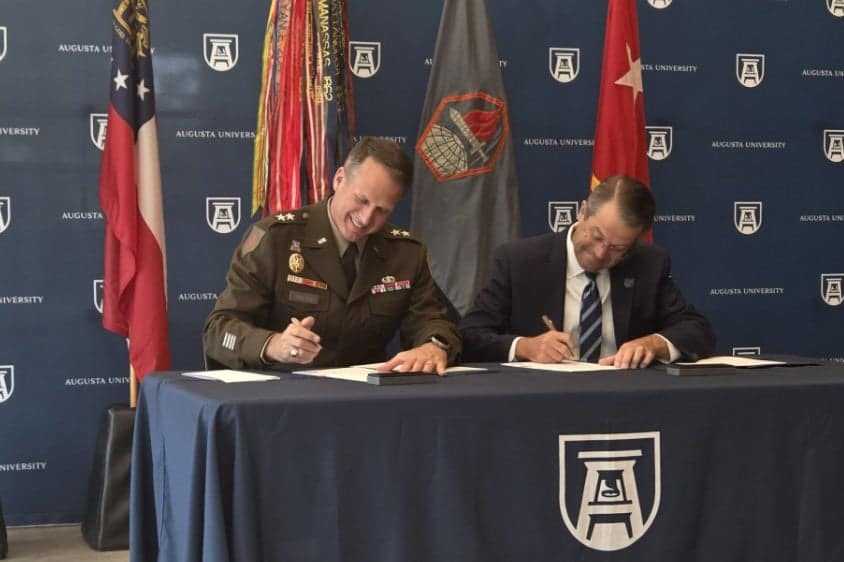
The U.S. Army Cyber Center of Excellence, Fort Gordon, and Augusta University have signed a new memorandum of understanding (MOU).
It ensures service members at the Army post can further their education at their own pace.
The ceremony was held at the Georgia Cyber Innovation and Training Center (GCITC), which has served as a home base for training and education. GCITC Executive Director Eric Toler told ABD this new MOU solidifies the role the center plays in providing unique educational opportunities to military personnel.
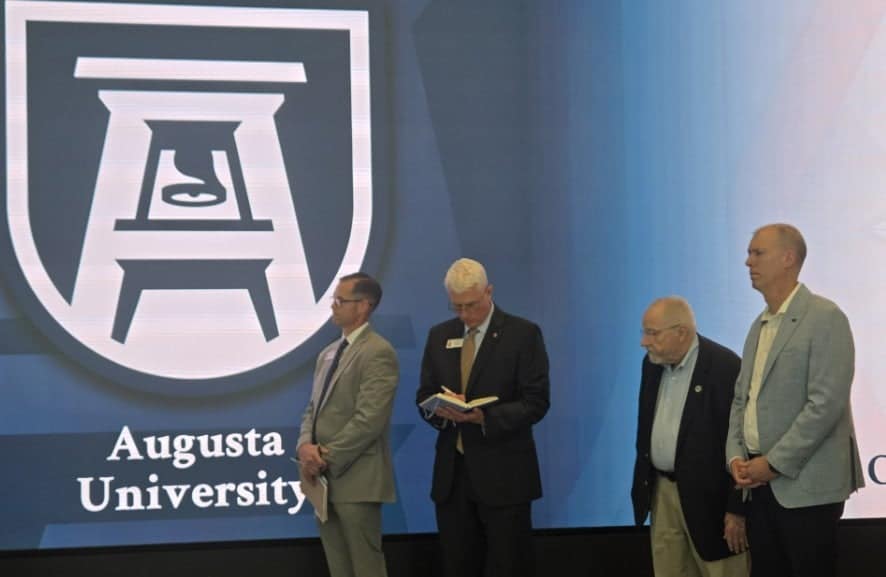
“It really is a testament to what we’ve been trying to accomplish, to provide education, training, the whole workforce development component, partnered with Fort Gordon,” said Toler. “So that our service members will be better prepared, so that we get to leverage their capabilities that then also benefit our students, benefit our faculty in the university, and overall, the community wins.”
That benefit can also extend to the regional business community. Keeping GCITC and Augusta University working together provides opportunities to train the skilled workforce that businesses need to succeed.
“The capabilities that we get from our partnerships with government, in this case, the Army Cyber Command, the Cyber Center of Excellence. We get to implement that into our education programs, which then benefit what we do to provide services,” Toler explained. “We are using our students, led by experts, to provide services at the local level, so those are our local businesses, local governments, school districts, rural hospitals, etc.”
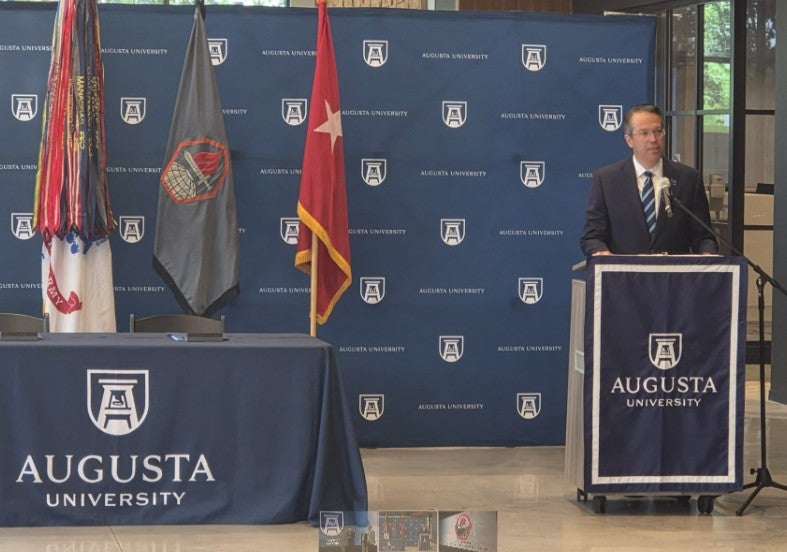
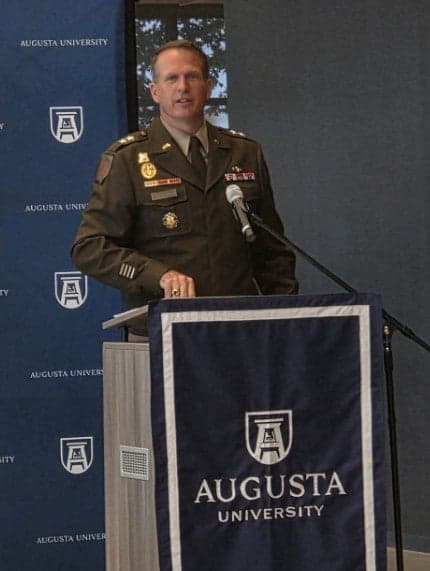
The MOU was signed by Augusta University President Russell Keen and Commanding General of the U.S. Army Cyber Center of Excellence, Maj. Gen. Ryan M. Janovic.
In the news release announcing the signing, Keen said the university is proud to continue the collaboration with the U.S. Army Cyber Center of Excellence.
“At Augusta University, we believe life-changing, life-saving education takes many forms. Whether our graduates are caring for patients, defending critical infrastructure, strengthening our nation’s cybersecurity, or supporting the intelligence community, they are using their education to protect and improve lives,” said Keen.
The newly adopted MOU calls for updates in the Master of Science in Cybersecurity Management and Technology, as well as the Master of Arts in Intelligence and Security Studies, the Master of Arts in Intelligence and Security Studies with a Technical Intelligence Analysis Concentration, and the PhD in Intelligence, Defense and Cybersecurity Policy.
Janovic said the agreement keeps a spotlight on the importance of the relationship, as well as the support it provides to critical skillsets.
Janovic emphasized the magnitude of this relationship and the critical skillsets it supports.
“This partnership with Augusta University is a force multiplier for our formations. By translating our rigorous military training into academic credit, we bridge the gap between military instruction and higher education,” Janovic said. “This agreement honors the dedication of our soldiers while strengthening our strategic talent pipeline. Together, we are building the most educated, agile, and lethal cyber force in the world.”
Toler said it also points to GCITC being a unique intersection of government, academia, and private industry.