
Read a good business book lately? 5 CSRA company leaders did the work for you! Here is what they found to help you with your day-to-day work.
Panelists from five different types of business, Andrea Bowles, Blanchard & Calhoun Real Estate; Elisha Ford, ER at Sweetwater & Martintown; Greg Greenawalt, Gracious Hospitality Services; Isaac Kelly, Aiken Staffing Associates, and Cynthia Rhodes, Rhodes-Porter Group, presented “Moments That Move Us: Five Powerful Messages to Shape Business & Leadership.”
Andrea Bowles introduced attendees to “The Energy Clock” by Molly Fletcher. Fletcher’s premise is energy breaks down into three categories: green, yellow, and red. Green energy is what excites a person, something they look forward to doing. Yellow signifies less exciting things that they may not want to do. Red marks things a person simply does not want to do.
Bowles provided a worksheet for audience members to break down each category in their own lives.
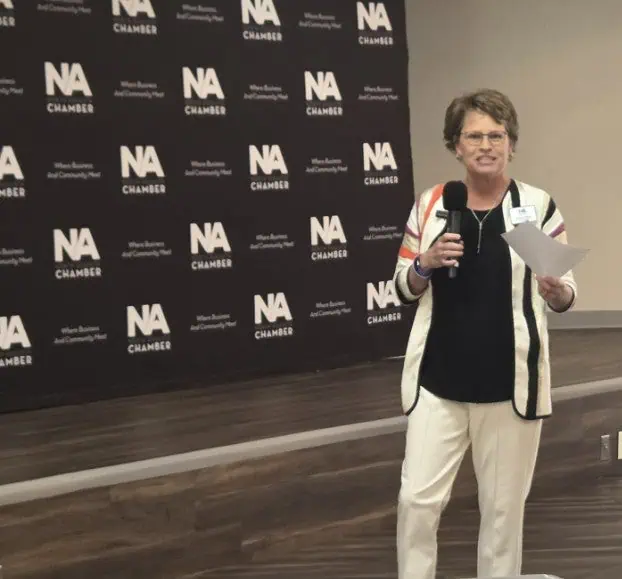
“The key is to try to identify those so you can protect your green energy. Your goal is to protect the greens, to contain the yellows so it doesn’t take over your whole time, and to find a way to rethink or reduce some of the reds,” she explained. “As you’re moving into 2026, make sure you protect your time. Protect your greens, contain your yellows, and reduce or redesign your reds. Energy is your most valuable currency. Spend it intentionally.”
Elisha Ford, with the ER at Sweetwater at I-20 exit five and the ER at Martintown, currently under construction, introduced the book No Ego by Cy Wakeman.
“One of my favorite quotes from the book is, “Your circumstances are not the reason you can’t succeed. They’re the reality in which you must succeed,” she said.
Ford said it is the difference between ego and self-confidence in yourself, and how you can foster it in the workplace.
“An ego operates out of self-interest. It seeks approval, accolades, validation, and all costs in order to be seen. It’s resistant to feedback and a motive that is rarely verifiable,” she said. “Confidence is that faith in your own abilities and belief in yourself in the workplace.”
The book also addresses dealing with drama in the workplace, particularly with a staff member that may be known for complaining.
“You can have an open door, but that doesn’t mean you need to sit and sympathize with an employee who’s complaining about the same problem over and over and over again. Put it back on them and ask them to help you fix the problem, ask them for the solutions. That will free up a lot of your time to focus on the things that you are there for,” said Ford.
Greg Greenawalt, owner of Gracious Hospitality Services, drew on his more than 40 years of experience in the hospitality industry. Prior to retiring, he was general manager of the Crowne Plaza Hotel in North Augusta.
He said, on an average day, a person has from three to five customer service-style interactions. It could be face-to-face, by phone, or through digital channels. The customer can decide to purchase or recommend a product or service based on whether the interaction was exceptional, average, or poor.
“Price Waterhouse Coopers research indicates that 73% of consumers say that customer experience is a key factor in their purchasing decision. According to Salesforce, 88% of customers say the experience a company provides is just as important as the product or services that they sell,” he said. “It costs five to 25 times more to acquire a new customer than to retain an existing one.”
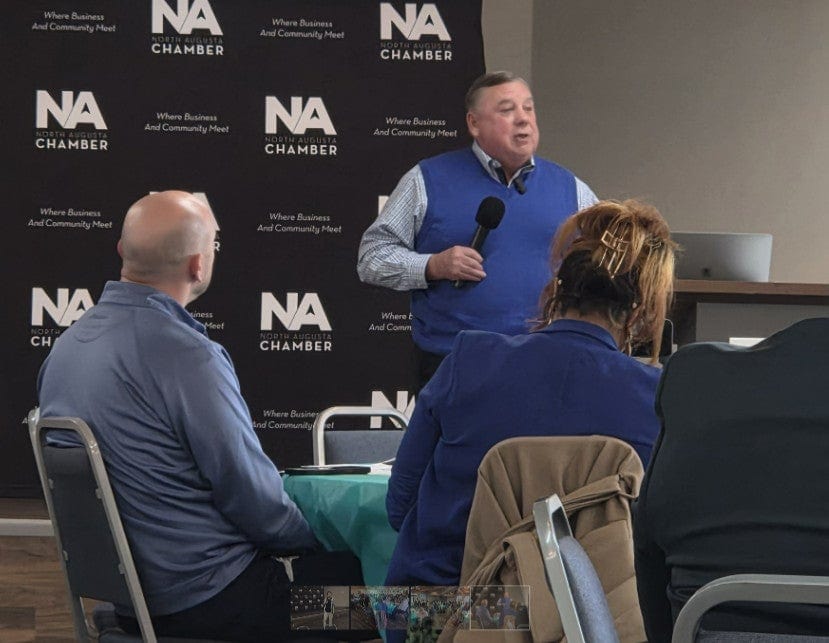
Greenawalt said owners must also have clearly defined parameters for staff empowerment, rather than always referring a customer to a manager.
“You need to define what your online service staff are allowed to do, so that they don’t feel like their hands are tied within the art of service recovery. It’s very important,” he advised.
Isaac Kelly, with Aiken and Augusta Staffing and the Job Shop, as well as a member of the chamber’s Board of Directors, recommended five books. Kelly said he prefers books that provide tactical information, steps he can immediately implement in his business.
One of those is Traction by Gino Wickman. It introduces readers to the Entrepreneurial Operating System (EOS).
“The EOS framework is very, very simple. Basically, it starts with, Do you have a vision and mission? If not, the book walks you through and gives you examples of how to create one,” Kelly explained. “Because if you don’t have a vision or a mission, and you don’t know where you’re going, you’re not telling your people or your customers or the community where you’re headed and what your job is, what is your facility within the business community. I think this is one of the best business strategy books I’ve ever read.”
Rounding out the panel of experts was Cynthia Rhodes, of Rhodes Porter Business Development Logistics Management. She recommended Peter Drucker, who wrote a series of books identifying five basic management operations.
“What is your mission? Who is your customer? What is your customer value? How are you going to measure results? And then, what’s your plan?” listed Rhodes.
Rhodes urged the business leaders to look first at their key performance indicators (KPI) to add value to their customers and their businesses. She added that strategy is not a buzzword. It is a path to customer, company, and personal development.