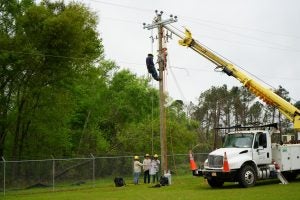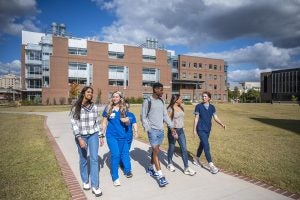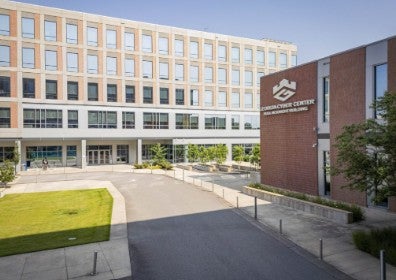
A center nestled within the Georgia Cyber Innovation and Training Center (GCITC) offers support to organizations that are vital to Georgia’s economy, health and public safety, but are vulnerable to cyber-attacks.
The Cyber Resiliency Center (CRC) works with small- to medium-sized manufacturing companies, local governments, municipalities, public school districts, and rural and community hospitals. Those segments have seen an increase in cyber-attacks ranging from ransomware to data breaches and operational disruptions. Not all are adequately equipped to guard against intrusions.

John McLain, Project Four Lead with Georgia-AIM (Artificial Intelligence in Manufacturing), told ABD, GCITC is designed primarily to address the workforce pipeline plus cybersecurity services. CRC leans into the latter.
“With the Cyber Resiliency Center, we are leaning more towards the service side. How do you provide world-class cybersecurity services to those in need that are both affordable and effective?” he explained. “From that perspective, the way we leverage our university and technical college students to be able to be that primary workforce that has expert oversight to deliver world-class cybersecurity services is truly innovative.”
It is not simply systems that are impacted by a cybersecurity breach. It disrupts healthcare, education, and supply chains. The purpose of the CRC is to stand in the gap between cybersecurity and organizations that may struggle to afford top-level protection.
According to the CRC website, participating organizations gain:
- Access to affordable, scalable cybersecurity resiliency services
- Expert guidance tailored to real-world operational environments
- Support aligned with industry standards and best practices
- Connections to a growing cyber workforce pipeline
- Increased confidence in cyber readiness and recovery
“The Cyber Resiliency Center really spans all the different platforms that we currently have going,” said McLain. “Cyber Resiliency Center leverages our Cyber Range because we have an environment set up for different kinds of training events, and that is in close coordination with our training Directorate.”
It also has a close collaboration with Augusta University. Students in the CRC act as liaisons for the School of Computer Science and Cyber Sciences.
“Students in the undergraduate degree program are actually developing tools that eventually will be leveraged by the Cyber Resiliency Center,” McLain said. “The students work closely with Eric (Toler, executive director), me, and the other directors to be able to give them a real-world experience that they have to deal with a customer in a way that is actually delivering something that’s real-world, not theoretical.”
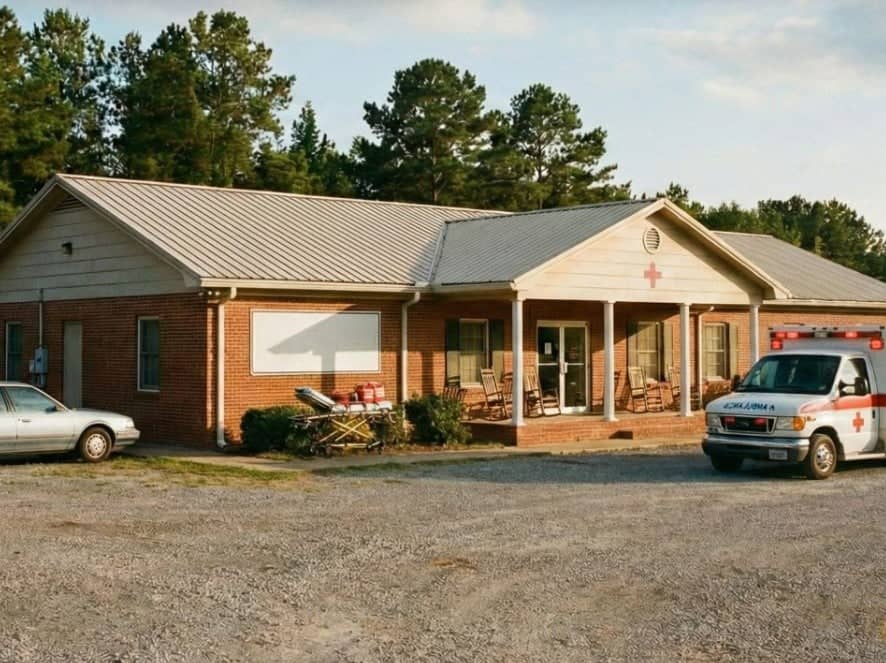
Work being done by the CRC is already bearing fruit. It is partnered with the Department of Community Health, which falls underneath the Centers for Medicare and Medicaid Services (CMS), as part of a contract under a $2.5 billion grant to provide cybersecurity services for all the rural hospitals and associated living facilities.
McLain believes the direct, real-world experience students gain by working with government and organizations creates an environment that persuades locally trained talent to stay local.
“It’s not effective if you’re raising cyber talent, talent that moves to the big cities or moves out of state,” he said. “You have to create the environment that allows these individuals to be engaged in a meaningful way. From an EDA (economic development authority) standpoint, there’s a lot of intentionality in how you create and incentivize a workforce to want to stay.”
McClain said they are working with Augusta University leadership to grow the program. The goal is to provide the CRC concept throughout the state of Georgia, as well as regionally and nationally.