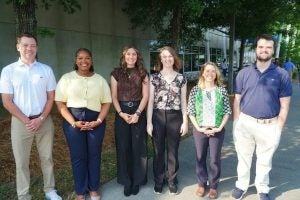
An editorial written by the president and CEO of the Georgia Chamber of Commerce points to one of the reasons the state’s economy is strong, and Metro Augusta plays an important role.
Chris Clark’s Op-ed piece examined factors pushing Georgia to record-breaking economic development over the past six years. Just shy of $175 million in investment from more than 2,600 projects, creating 255,000 jobs.
More significantly, Clark (See above photo) said 83% of that investment was found outside of Metro Atlanta. With the arrival of Aurubis Richmond, LLC and the expansion of StandardAero and Syensqo Special Polymers, $1 billion of it came from Metro Augusta.
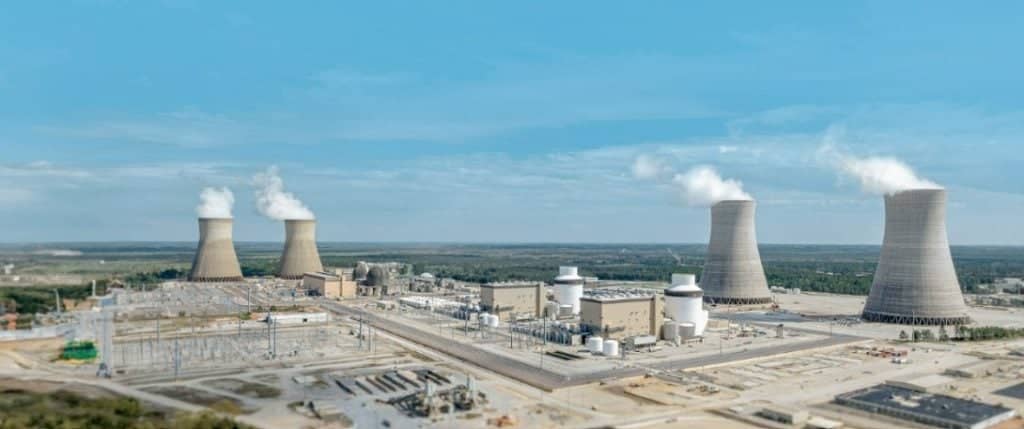
He credits utility companies across the state with having a diverse and collaborative energy ecosystem. He singled out bringing Plant Vogtle Units 3 and 4 online as a critical step in Georgia’s energy profile.
“It’s a key piece of the overall power piece. It’s always one of the key conversation pieces,” agreed Cal Wray, president and CEO of the Augusta Economic Development Authority (AEDA), while cautioning that not all companies see nuclear power as green energy production. “It depends on the company, because ultimately the megawatts are the biggest driver. For at least half of the companies we talk to, it’s a big piece.”

Meantime, Clark pointed to the state’s reliable energy infrastructure as a primary reason for the success, and attributes that to planning ahead.
“Our vertically integrated utility structure, overseen by the PSC, allows utilities to make long-term investments while remaining responsive to evolving consumer and business needs,” wrote Clark. “That system has helped Georgia maintain one of the most reliable and affordable energy environments among top GDP-producing states, even during periods of expansive growth, national inflation, and global uncertainty.”
Clark said reliable energy production extends beyond nuclear generation with Georgia embracing an “all-of-the-above” strategy that blends nuclear with natural gas, hydropower, emerging technologies, and solar energy.
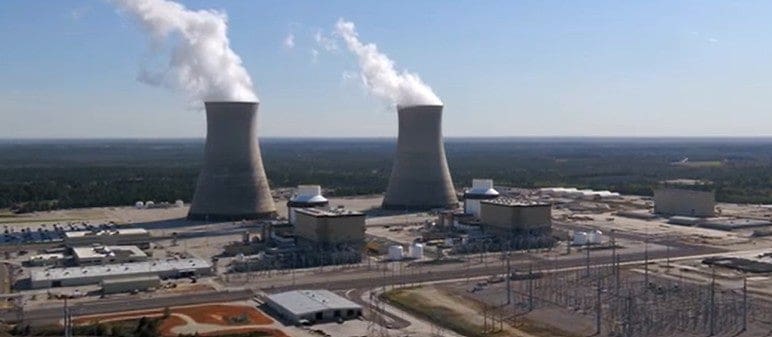
He said the diversity extends beyond the state’s ability to attract new companies to move to Georgia in the future. It also supports hospitals that need power to provide healthcare, and families need energy for homes and transportation. It even impacts the state’s agriculture industry, with farmers using energy to operate irrigation systems and equipment.
Reliable energy, in all forms, is also a factor in the state’s ability to support resident, retail, and commercial development.
That’s where the $22 million sewer extension project in South Augusta plays into the overall strategy.
“We believe we’re getting positioned right,” Wray told ABD. “We hope that the sewer project not only opens up industrial development, but also residential, retail, and commercial, especially as you bring more investment here, more jobs here, that should open up some of the other areas.”
For Chris Clark, the future boils down to five words: Energy security is economic security.
“The states that win economically over the next 25 years will be the states capable of delivering safe, reliable, affordable energy to support homes, businesses, manufacturing, logistics, innovation, and next-generation technologies. Georgia is positioned to lead because leaders here have consistently been willing to think long-term instead of waiting for crises to force action,” he wrote.