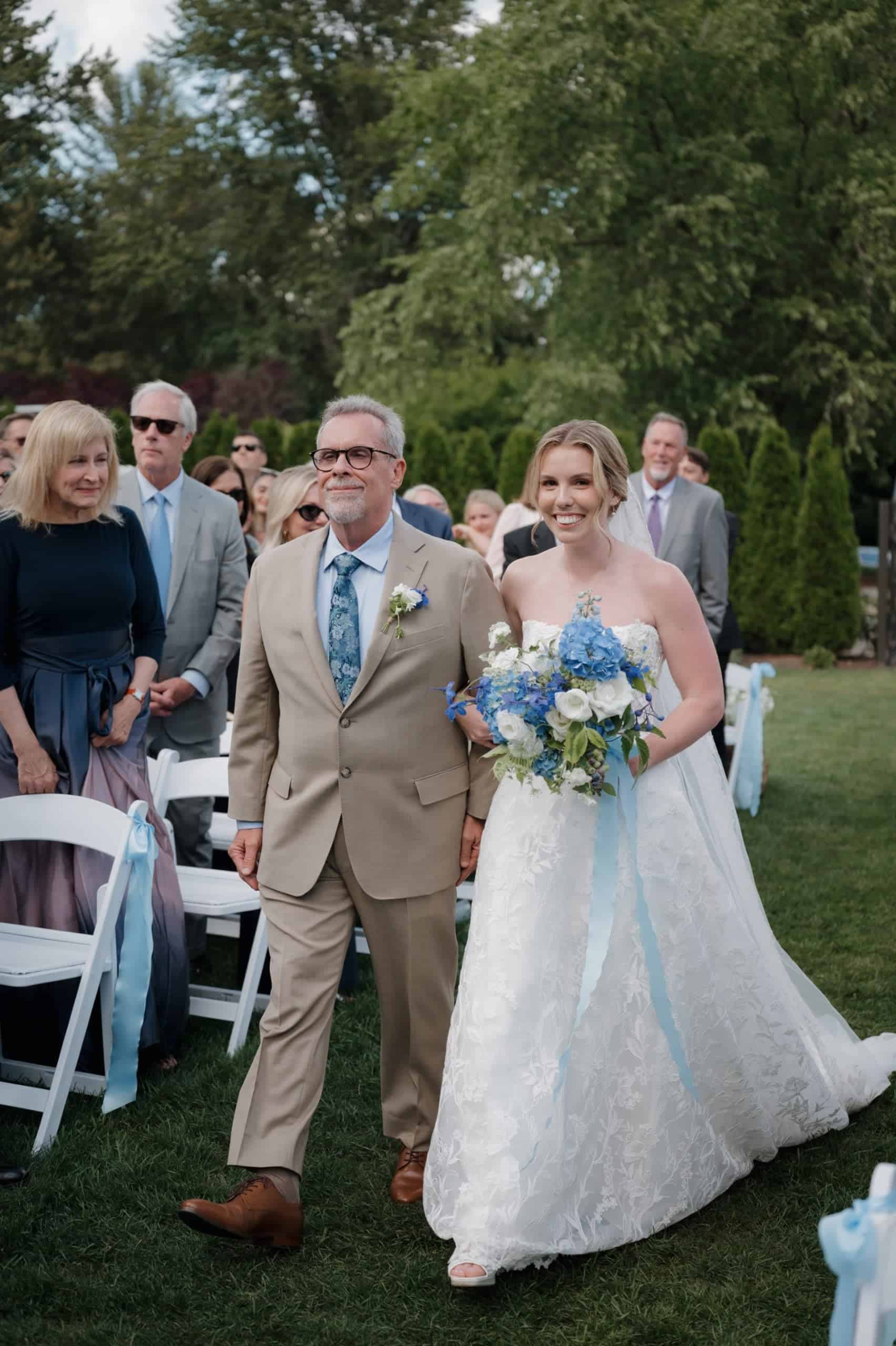
I’m back! You may have noticed my absence from the Augusta Business Daily (ABD) for a few weeks. My first week away was spent in Seattle, Washington, primarily for the wedding of the younger of my two daughters, Augusta Jayne, better known as AJ. As the father of the bride, I was primarily responsible for paying for the wedding (i.e., ceremony, reception, photography, florist, etc.).
My trip to the Pacific Northwest yielded a chock-full of lessons on running our businesses.
(Note: The groom’s family paid for a splendid rehearsal dinner and outstanding “Welcome Party” for our many out-of-town guests.)
Writing the check was probably my most important role for this occasion, except for walking AJ down the aisle and “giving her away.” Since AJ planned the wedding, with inputs primarily from her soon-to-be husband and my wife, she took on the role of the “project manager” (PM) of the event, while my role providing the funding for the event made me the Chief Financial Officer (CFO).
I found this experience as a “Wedding CFO,” one that provides many lessons learned that can be applied to the businesses managed and owned by my valued readers in the ABD.
Prior to delving into the lessons learned, a couple of caveats are in order.
First, the planning of a wedding is clearly “one of a kind,” so it is considered a “project.” So, good project management skills are necessary to pull off a successful wedding. However, second, since my role was that of providing the funding for the “project,” most of my lessons will focus specifically on how the funder can positively or negatively impact the project. Third, and finally, please note that there are some project management fundamentals that impact funding, and I will be sure to address those as well. With those caveats in mind, here are the lessons I learned:
- Lesson 1 – Setting a Budget: I feel like I was a little bit lucky here, but some of that luck was a “residue of design” (credit to Branch Rickey). There were two important aspects to my budget. First, I only gave my daughter/PM a total budget number and let her determine how to allocate that budget. The PM is typically the expert on the project itself, and this was particularly true for this wedding. Therefore, I put no limits on individual parts of the budget, only on the total budget itself, and this is good practice for any funder/PM relationship. Second, I put aside a “contingency buffer” to provide the PM and me with “wiggle room” to add funds as necessary. In the approximately twenty months between the initial planning of the event and its execution, it was wise to assume we might have to deal with inflation in general and unexpected costs in any of the various line items of the event. It also allowed me to look like a “hero” when I approved a more expensive alternative that might make a significant impact on the event. So, if you are financing a project, be sure to provide only a total budget (let the PM allocate it) and hold a contingency buffer to deal with changes and the unexpected.
- Lesson 2 – Fixed vs. Variable Costs: In many projects, in particular for events such as weddings, size matters. It is important that both the CFO and PM understand the implications of the size the event on costs. To do this, they need to understand which costs are fixed (do not vary with size), variable (impacted by each new guest), or a step function (go up as multiple guests are added). For instance, in a wedding, the cost of the deejay and photographer does not change based on the size of the event (fixed). However, food and drink are determined by a per-guest amount (variable). Finally, venue charge, setup, linens, etc., are often determined by a step function. For example, the cost might change with each 25 additional guests. For PMs and CFOs on business projects, understanding which costs are fixed, variable, or step functions is critical to determine how changes might impact costs.
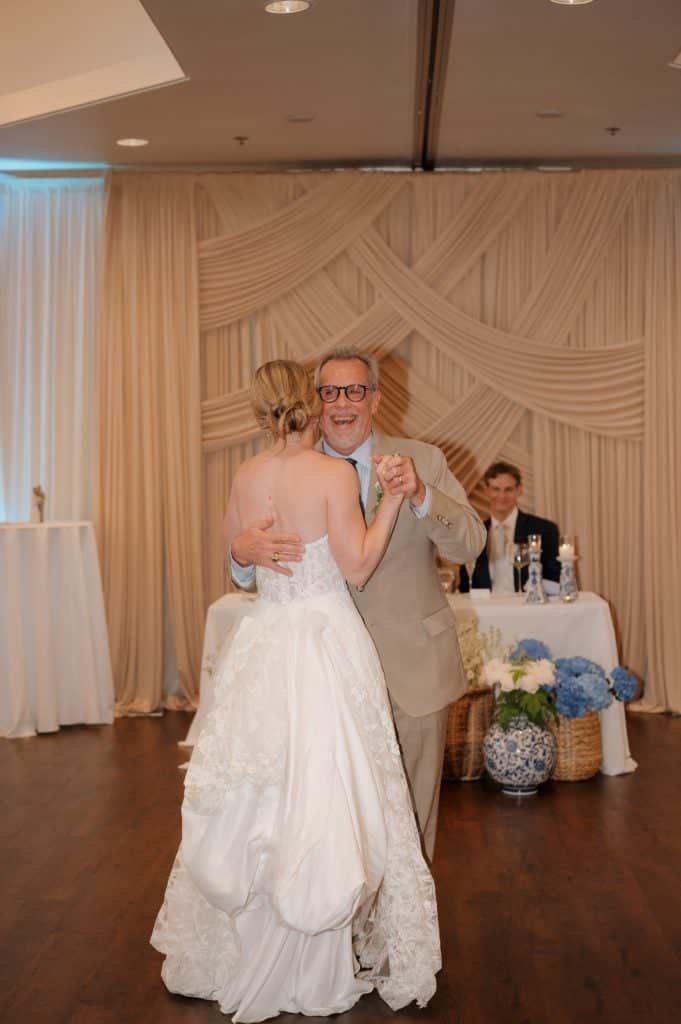
- Lesson 3 – Communicate and Track All Expenditures Over Time: It is highly critical for the PM and CFO to be in constant communication about how expenditures change over time. My daughter and I did that pretty well with one notable exception, which was not fully our fault. As she considered changes, she came to me with the details and the costs prior to contracting with the vendor, which was outstanding and a good model for businesses to follow. One issue that stung us was how taxes and service fees were determined by the venue vendor. The initial estimate provided to us was incorrectly calculated by someone in their accounting department. When they corrected it (following the tax laws of the State of Washington), we ended up with additional unexpected costs. Fortunately, my contingency buffer covered most of it, but I could have done a better job of reviewing the estimate rather than assuming it was correct. Fortunately, my daughter caught it quickly, and we made sure we had the funds available to cover the overrun. For businesses, this shows the importance of vigilantly tracking expenditures over time and constant communication between the PM and CFO.
- Lesson 4 – Scope Creep: While not specific to the financial side of a project, one of the big lessons learned, both in weddings and projects in general, is “scope creep.” That is, increasing what is included in the project in an incremental manner. In weddings, this typically means the bride and/or groom, or one of the sets of parents, wanting to add on something special that was not in the initial plan. Whether it is a wedding or a business project, all such “bells and whistles” need to be evaluated for necessity and its impact on the project cost.
As you can see, there was much for me to learn as a “Wedding CFO.” Hopefully, I will remember these lessons as I plan my older daughter’s wedding, which is planned for June 2028, and hopefully, these are lessons you can apply to projects in your business. After my stay in Seattle, my wife and I traveled to Alaska. So, next week, I will share my lessons learned as a hospitality and service consumer in Seattle and Alaska.