Two weeks ago, I reported a decline in employment for the metro area. Fortunately, this week I can report that other components of the local labor market improved or stayed the same in February.
The seasonally adjusted unemployment rate remained at 4.5% for the third consecutive month. The labor force, those in work and those looking for work, increased by 2,400 in February, and by almost 8,000 over the last year. Average weekly hours worked increased to 34.3.
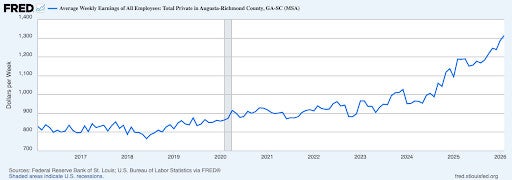
In January, I reported average weekly earnings increased to a record high, and that climb continued into February. Average weekly earnings were $1314.38 in February. The graph below shows average weekly earnings increasing from about $900 post covid.
The war in Iran has increased concerns about inflationary pressures on the economy, with the latest inflation figures coming in at 3.8% for April. Gas prices at the pump have increased by over a dollar nationally, along with other supply chain concerns such as higher fertilizer costs impacting food prices. However, local earnings have increased faster than inflation since December 2024. After a decade of earnings trailing prices, earnings have increased by 15% since December 2024, faster than inflation at 4%.
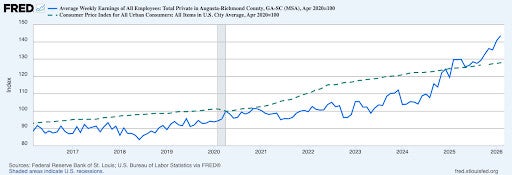
Why the concern about affordability when earnings are rising faster than prices? Some is due to the long periods where the opposite was true (see above). Also, people’s perceptions of frequently purchased items (gas up 22% in March, tomatoes up 15%) weigh more in the front of their minds than less frequently bought items (“other condiments” down 7.8%, sewing machines down 1.4%). Finally, there are some substitutions taking place which the price index is slow to adjust for. For example, because gas and other items have gotten more expensive, some people may not go to sporting events as much, and the price of admission to sporting events is down 10%. But if you didn’t go to the ballpark, you don’t benefit from the lower price; you just resent having had to give up an evening out watching a ball game.