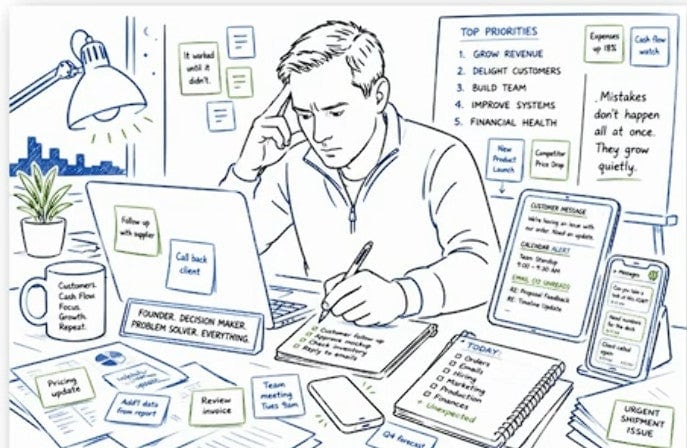
Owners of startups and established businesses face a laundry list of potential pitfalls from financing to marketing to customer retention. But there is one that may slip by: a simple goof-up, large or small.
SCORE, with an Aiken chapter, is an organization of retired business leaders that mentor business owners and held a webinar called Goof-Proof Your Business: Prevent Costly Mistakes Before They Happen.
Led by William Holsten, a business mistake prevention specialist and mentor with SCORE’S Delaware chapter, the message was clear. No matter how long someone has been in business or the size of the business, mistakes are inevitable. The trick is to spot them in advance when possible or have an action plan to recover.
He conducted a study with more than 30 business founders.
“The ones who recovered best first acknowledged the mistake happened, then they took the time to understand what really happened,” he said. “Not just the event, but the underlying cause. Then they changed something about the business. They didn’t just simply promise to be more careful, and as a result, they became much less likely to repeat the same mistake.”
The business leaders told him that, over time, confronting and dealing with mistakes made them stronger leaders with a stronger business.
The study also revealed the usual underlying causes that led up to the mistake. The mistake did not happen, said Holsten, because they were careless or unintelligent.
“They happen when capable people are operating under changing conditions, those being stress, overload, rushing, distraction, and often don’t realize how those conditions are changing the way they think and work,” he explained. “Once you understand why these things happened, you can start catching problems earlier while they’re still small and they’re still manageable.”
Holsten said part of the problem that leads to mistakes is that the early signs can seem normal. Nothing feels reckless; it can simply feel like a busy day. Once a business owner identifies the events that led up to the mistake, they turn it into a learning experience.
“You change how you operate,” he said. “You pause before responding and ask, ‘What might I be missing?’ You deliberately give this work your full attention, and the signal is caught earlier. A better decision gets made early. It doesn’t remove the pressure. It doesn’t eliminate busy weeks. It changes how you respond while you’re in them.”
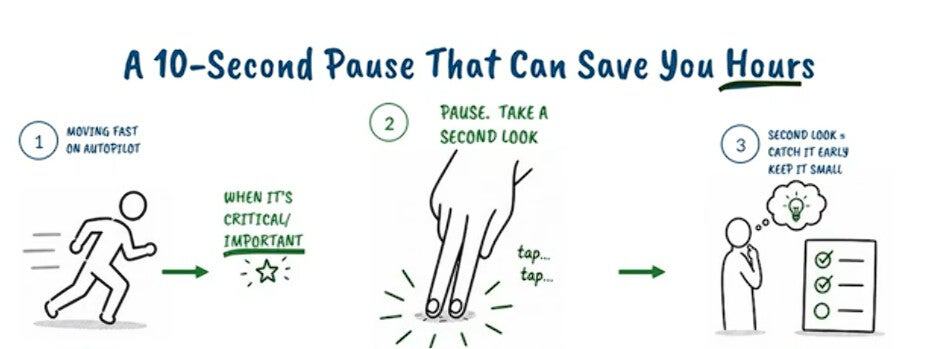
Holsten said it is easy for anyone in business to enter what he called “auto-pilot.” That is simply falling into a pattern of each day unfolding the same way until something happens to disrupt the normal flow.
“When you reach one of those important moments, give yourself a simple reminder to pause. I call it a second look,” he said. “The reminder is to physically hold up two fingers. That tiny gesture reminds you to step out of autopilot for 10 seconds. Many times, you’ll continue exactly as planned, but every so often you’ll catch something important before it becomes a problem-a missing detail, a flawed assumption, a customer concern.”
Holsten turned his attention to the potential consequences of how even what appears to be a small mistake can lead to a catastrophic impact.
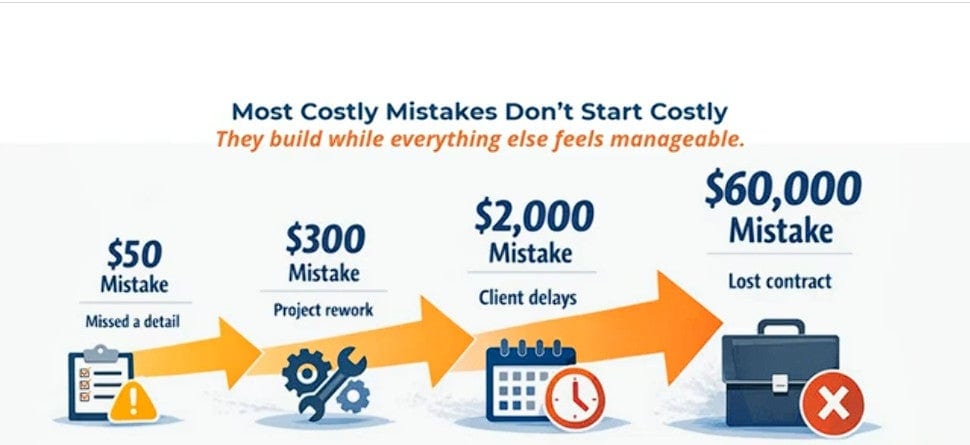
“It doesn’t begin with a $60,000 mistake and a lost client. It begins small, maybe a $50 mistake that nobody thinks is a big deal,” he detailed. “And at that point, everything still feels manageable. But then, it can multiply. The small mistake leads into a more expensive project rework, which can lead into a delay for a client. And if it’s really terrible, you lose the client.”
Holsten is the author of “How to Avoid Unintentional Blunders That Derail Entrepreneurial Success.” The business mistake risk quiz that he developed is available online. https://williamholsten.com/mistake-risk-quiz/