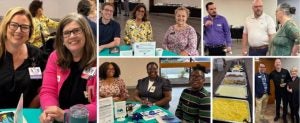
Imagine walking into a call center and hearing music or seeing employees dressed up for an indoor Mardi Gras parade. If that sounds a little too far-fetched, those kinds of things happen at T-Mobile’s Augusta call center, according to Rachel Romero.
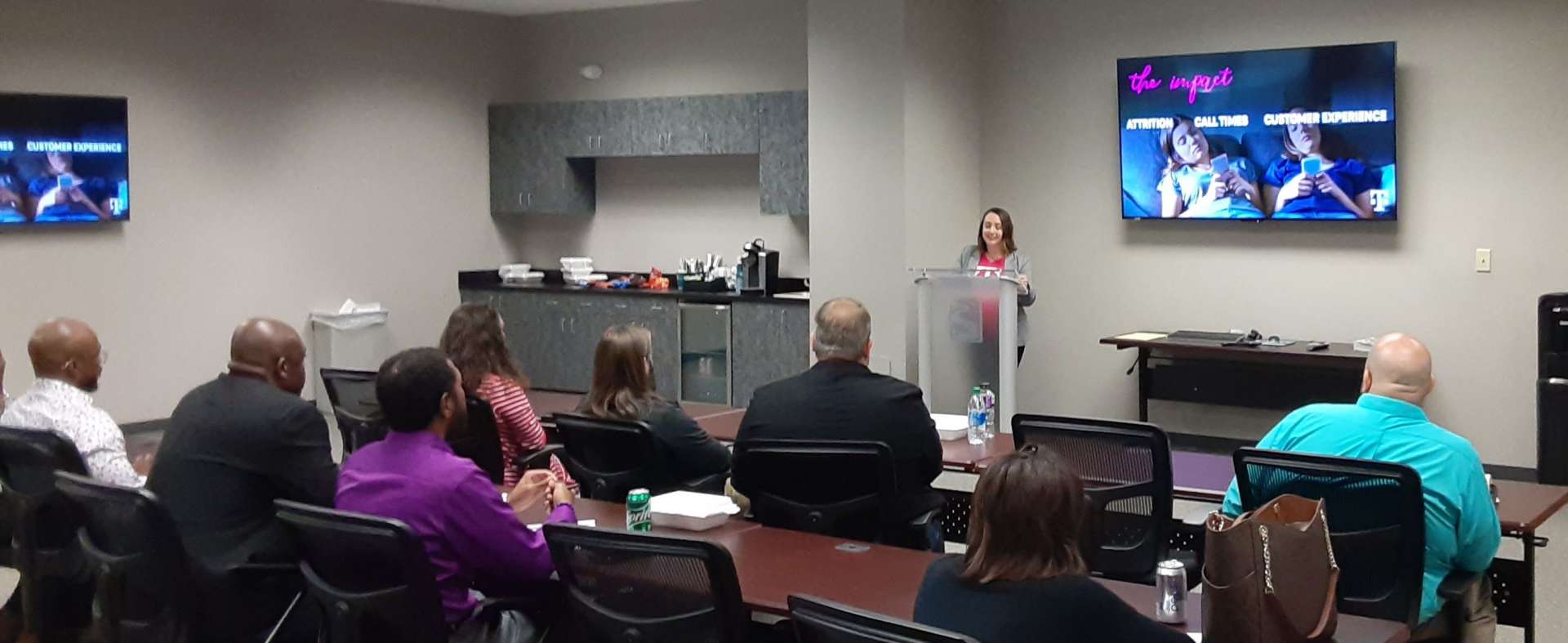
Romero, the center’s director, was the guest speaker for this month’s Third Thursday Business Builder, hosted by the Augusta Metro Chamber of Commerce on Thursday. The topic was “The Art of Customer Care Post-Covid.”
As a director, she oversees a team of more than 800 Customer Care Experts, as T-Mobile refers to them. If there’s one thing Romero has learned in this job, it’s providing excellent customer service that starts with building a positive workplace culture.
“The culture you create for your employees directly affects your customers’ experience,” she said. “Happy employees create happy customers.”
Capri Hyatt, the multiple line representative for State Farm Agent Keith Perret, attended the Chamber event and said it’s important to make the work environment as pleasant as possible.
“It makes employees want to be there,” Hyatt said. “If you love what you do, you’ll never work again.”
Romero said that for about two years, the T-Mobile call center’s culture suffered because most of its employees were working from home due to the pandemic. The center remained open primarily for those who didn’t have the technology to work remotely.
“We changed our culture for work from home,” Romero said. “We did virtual recognition ceremonies and team builders, but they weren’t the same.”
Some employees struggled with their mental health, thanks to the isolation of working remotely, while others found new jobs.
“We experienced the Great Resignation,” she said.
Romero said because of these issues, customer service also suffered. Average call wait times increased to more than three minutes, and customer experience scores dropped.
In 2021, she began to think about how to get her employees back in the office.
“We knew it was critical to bring our team together,” Romero said.
She had three options: Bring everyone back to the office full-time, continue to work from home, or a hybrid of the two. Romero chose the hybrid model, which allows her team members to work from home three days a week and work in the office the other two days.
They began using the model on April 1. But not all employees are guaranteed a hybrid schedule. It all depends on their attendance and job performance, but about 75 percent of its workers have that type of schedule.
New team members are required to work in the office until they’re ready to work from home.
She said the model has been a success so far.
“Absenteeism has already dropped by 2 percent, and our customer scores have been better than ever,” Romero said.
Having everyone back in the office also has other benefits.
“We can create some fun and excitement,” she said. “It’s a tough job; people don’t call a customer service organization to tell you how much they love you.”