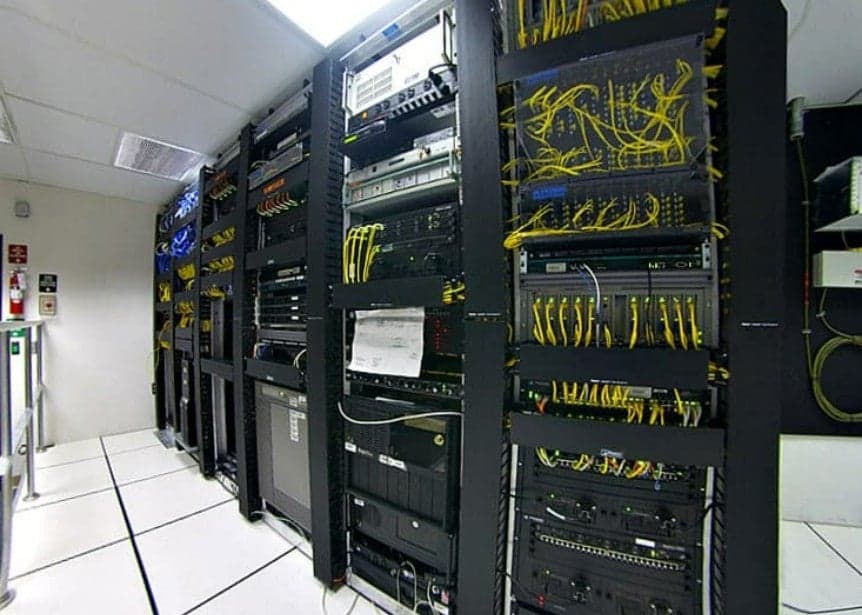
The Georgia Chamber of Commerce’s recent examination of the state’s energy supply included a panel discussion on a topic garnering great interest in the Augusta area.
The 2026 State of Energy focused on energy and infrastructure, one of the five pillars in the Georgia 2050 strategic plan.
In his opening remarks, chamber president and CEO Chris Clark announced the organization will launch two new initiatives focusing specifically on data centers.
One will be the “Data Center-Ready” designation. The purpose is to help elected officials and communities make informed decisions about the viability of a data center in or near their municipality.

“Do you have the fiber access, water systems, workforce, land use, the right zoning, and most importantly, I think it will help communities replace misinformation with facts and preparation,” detailed Clark. “We’re not saying that every community wants a data center. We want to make sure that those that do are following the right process, are transparent, and can work with all partners that might be interested.”
Cal Wray, president and CEO of the Augusta Economic Development Authority (AEDA), told ABD the goal of the program is reasonable.
“Every data center is different,” said Wray. “For us, we don’t want the large water users. “But for our community to understand what your water is, what is your sewer, what is your fiber. Those are all pluses because they help over multiple industries. A lot of people don’t know what their capacities are. So, having a service through the chamber that understands it, that can put this together for a community, so you know what your real resources are, that’s always a plus.”
Wray said understanding existing utilities and infrastructure was critical as the Augusta Corporate Park on Mike Padgett Highway was being developed. Ultimately, AEDA laid fiber cables to make it attractive to large tenants.

Municipalities across the country are beginning to meet with resistance from citizens trying to keep data centers out of their communities. The Augusta Commission recently adopted a nearly 50-day moratorium on new data centers to provide time to collect public input.
However, Project Eisenhower, the data center with six buildings set for construction on Gordon Highway, is exempted, as it has already received the necessary approvals. The property is bounded by the Haynes Station and Captain’s Corner subdivisions.
Wray said this is why communities should consider revising their zoning parameters to include a data center-specific zoning category.
“Because right now it just all falls under industrial and having a breakout specifically for a data center will make the surrounding property owners know exactly what it’s being rezoned for,” he said. “Industrial is a catch-all, so having it specifically broken out for data centers, I think, is a plus.”
Wray cautions, however, that the rights of private property owners must still be considered.
“That’s what people want to enact. They want to tell a private property owner what they can do with their own land, but don’t want to be told what they can do with their own land,” he said. “Yes, you have to protect the surrounding neighbors, but if you go through the zoning and you go through the permit and you have experts looking at all of these things and saying here are your parameters, but the adjacent owner says ‘I don’t want you doing that here, so therefore you can’t do it.’ Why is that fair?”
The Georgia Chamber’s second initiative is the Digital Infrastructure Alliance. Clark said it will map the ecosystem for the state’s economic future.
“That means the utilities, our data center operators, fiber providers, construction companies, engineers, communities, even the companies that use huge amounts of data every day,” he said. “We want you at the same table to share, talk, and to develop the right plan to make sure that we are moving in the right direction.”
Clark introduced his audience to a word relatively new in the energy lexicon: Zettabyte.
He said one zettabyte is the equivalent of one trillion books, or four billion iPhones, or 300 billion hours of video. A decade ago, the world generated about 15 zettabytes of data annually. Because of consumer demand, it is now 180 zettabytes.