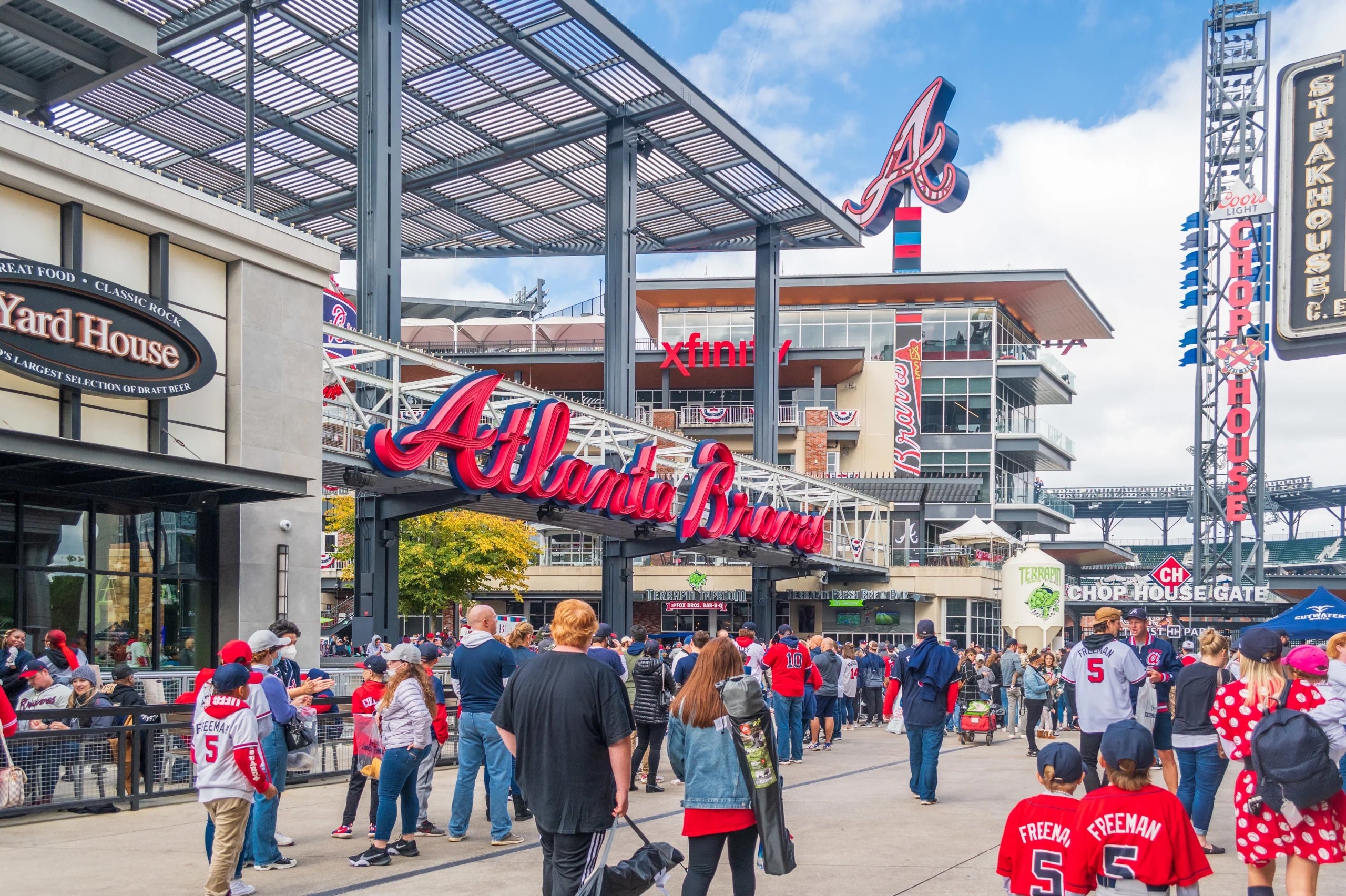
Publisher’s Note: Yours truly is a bit of a **** yankee, though I am a diehard NY Mets fan in baseball. Our esteemed columnist, Dr. Rick Franza, is a huge Atlanta Braves fan. Our teams are going in different directions this year, with the Braves setting records—a far cry from the 2025 disappointing season.
The Braves are mentally strong, and Dr. Franza gleaned some lessons learned for our businesses.
Dr. Franza: Many fans and members of the media called for a major shakeup of the team before the start of the 2026 season. Fortunately, the Braves’ President of Baseball Operations and General Manager, Alex Anthopoulos, did not listen to them.
He took a more nuanced approach to making changes to last year’s team, which we all can learn from as we help our businesses and organizations overcome a rough patch. The Braves have clearly overcome their rough patch, winning 25 of their first 35 games of the 2026 season, their best start since 1892 when the team was playing in Boston and known as the “Beaneaters.”
The transition from the 2025 season to the 2026 season began shortly before the end of the 2025 season when Braves manager, Brian Snitker, announced that he was retiring at the end of the season. Snitker had been extremely successful, winning 811 games and leading the Braves to the playoffs seven times (including a World Series championship in 2021) as noted above, but some fans and media members thought it was time for a change. Those same people felt the Braves should hire someone from outside of the Braves organization to shake things up and bring in a “new voice.” Fortunately, Anthopoulos understood things differently, which leads us to Lesson #1 in recovering from a bad stretch:
- Lesson #1: Evaluate Your Leadership Fairly. Anthopoulos realized that, despite the poor season, the problem was not leadership. Throughout the poor season, the Braves continued to play hard when they could have basically gone through the motions. Snitker had built strong relationships with his players, which resulted in strong effort, leading to a 10-game winning streak toward the end of the season. Anthopoulos decided to replace Snitker with his top lieutenant, Walt Weiss, who, during the previous eight seasons as Snitker’s bench coach, developed similarly strong relationships with his players that has helped get the team off to its fast start. So, do not change leadership just for the sake of change. If current leadership is working, keep it intact. This is also related to Lesson #2…
- Lesson #2: Maintain a Strong Culture. For years, many very good players wanted to come play for the Braves because of its team culture. The team has always been known for having good people on their team who all get along and support each other. It might sound surprising, but this is rare in professional sports, and the teams that have strong cultures tend to be most successful. The lesson here is that when your organization goes through a bad stretch, if you have a good culture, do not make changes that might undermine that culture.
Clearly, Anthopoulos realized that his team’s leadership and culture were not the problem, so he did everything he could to keep them in place. So, what he had to do next leads us to Lesson #3:
- Lesson #3: Conduct a Dispassionate Analysis of the Situation. After 8 years of great success, the extremely unsuccessful 2025 season shook up the management of the Braves organization, but Anthopoulos in particular. So, following the season, he did a clear-eyed analysis of what went wrong. Once you take emotion out of the equation and look at the problem clearly, you will likely be able to determine what caused your problem. This was the case for Anthopoulos and the Braves, and led to Lesson #4…
- Lesson 4: Assess and Mitigate Risk. As Anthopoulos assessed what went wrong in 2025, much of it had to do with injuries and unexpected poor performances. In the past, he avoided such “bad luck,” so he never realized the risk he was facing, and he never had a strong bench to address such risks. Entering the 2026 season, he acquired multiple players who shored up his bench and gave Weiss more flexibility, which has helped lead to the team’s fast start in the face of injuries and slow starts by a couple of their star players.
In the case of the Braves, right now, it looks like the 2025 season was just a blip; one poor season in a series of strong seasons, and it looks like they are on track again. This may be the case for your organization, or it may not, which leads us to Lesson 5…
- Lesson 5: Rough Patch or Downward Trend? If you are or have been going through a bad stretch, you need to determine if it is a “blip” like the Braves’ 2025 season or the start of a downward trend. It is important to make this determination as quickly as you can. If it is the former, trust your long-term plan that has been working and fix the things that have changed. If it is the latter, more radical changes will likely need to be made.
While the great start of the 2026 Braves season has us all excited for a fun summer, it also provides a great lesson on how to overcome a stretch of bad performance.