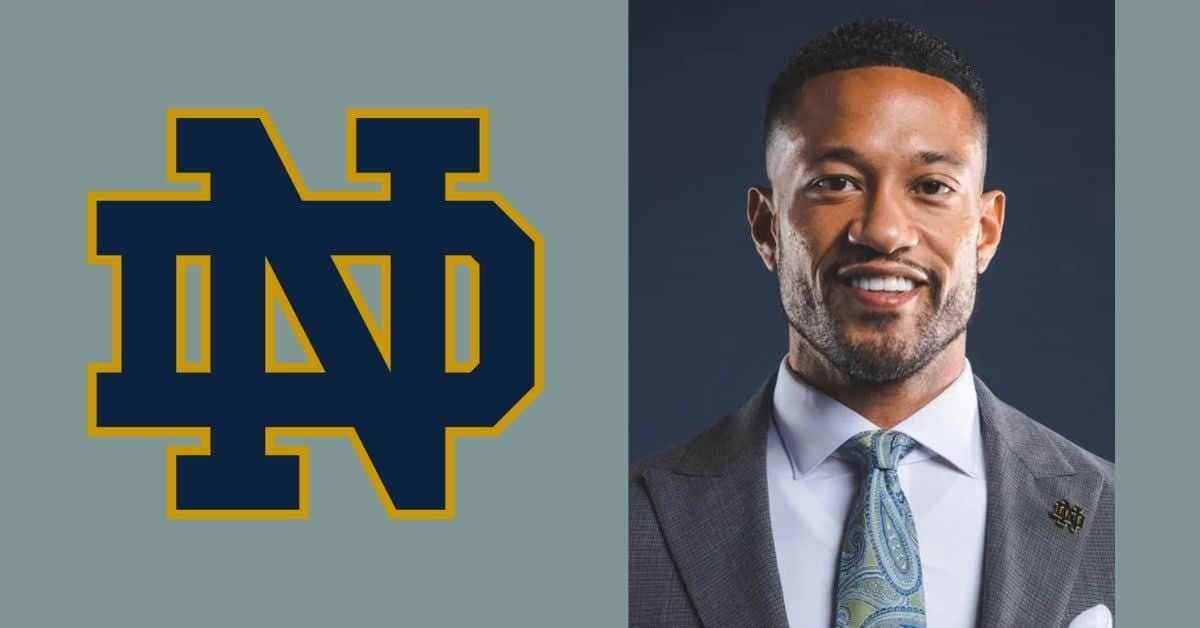
This weekend, I will be heading back to my alma mater, the University of Notre Dame, for its football game against Michigan State University on Saturday night. ND’s Coach is a three-tool threat for success: Sports, Academics, and Business.
I usually go back for a game once a year to spend time with my friends and enjoy the traditions and excitement of college football. While Notre Dame football has a long history of on-field success, it has not won a national championship in almost forty years and has not experienced the level of success that schools like Ohio State, Georgia, and Alabama have in the last couple of decades. However, Notre Dame can still be proud of the academic and post-college success of its former players in that timeframe. Annually, Notre Dame has among the highest graduation rates among college football programs, and while some of their former players go on to fine careers in professional football, many others find success in business, media, and many other career fields.
However, since Notre Dame named Marcus Freeman as its head coach in December 2021, the program is achieving its best performance on the field since the mid-1990’s (including a national championship game appearance at the end of the 2024 season), while still maintaining the strong academic performance and post-graduation success of its players. The on-field success has led to an early top 5 national ranking this season and many prognosticators seeing Notre Dame as a potential national champion. I believe this elevated on-field success is in large part due to the culture of the program instilled by Coach Freeman since his promotion from defensive coordinator to head coach. In today’s column, I will discuss the key elements of the program’s culture and how you may implement some of what Freeman has done to improve the culture of your organization.
Coach Freeman is known for several mottos, catchy phrases, and leadership maxims that define the culture of his program. While such phrases can be seen as simplistic, empty platitudes, Freeman does a good job of pointing out their substance and meaning. Here are some of his most noteworthy culture-defining phrases:
- “Choose Hard”: With this phrase, Freeman is telling his players and young men that he is recruiting to play at Notre Dame, and that for long-term success, it is better to choose to do something that is harder rather than taking an easier path. He stresses to recruits that at Notre Dame, they will have to go to class (as opposed to online classes) and will constantly be academically challenged. This will pay off when they are done with football and competing for fulfilling careers. This ties in with another of his phrases, “4 for 40” or “4 for Forever,” which reflects that if they invest effort in the four years at Notre Dame, it will pay off for the rest of their lives.
- “Team Glory”: Coach Freeman uses this phrase to encourage his players to prioritize team goals over individual goals. However, he backs this up by ensuring everyone on the team understands their value and their roles, even if they are not starting players. This goes hand-in-hand with his emphasis on “The Brotherhood,” playing for and supporting each other. Freeman has stressed how team glory leads to individual glory, such as how even though their two star running backs on the 2025 team had to share the spotlight, they both went on to be first-round draft picks.
- “Clean Your Plate”: This phrase emphasizes to the players that if you show you can handle what you are currently assigned, then you will get more responsibility. This encourages everyone to do a better job, so they increase their role and move up the depth chart. This phrase goes along with “Leave No Doubt,” Freeman’s rallying cry that emphasizes maximum preparation, flawless execution, and removing any question about their effort or potential.
- “One Play, One Life”: The purpose of this phrase is to emphasize total focus on the present moment over final outcomes or past mistakes. Therefore, players give maximum effort and execution to the single play happening right now. It helps players flush out a bad play and forget a great play to focus on the next task. Such an emphasis enhances resilience, allowing a comeback from a bad play or mistake, while developing a mindset that is process-driven, valuing daily discipline, preparation, and consistency over worrying about the scoreboard.
Most organizations can benefit from the cultural elements that Coach Freeman espouses. Whether it is “choosing hard” by not taking the easy way out, prioritizing organizational over individual success, everyone “cleaning their plate” to move up in the organization, or maintaining focus on the current task at hand rather than dwelling on past mistakes or successes, our organizations will be better off if our members adopt any or all of these. The key question is how we instill these elements in our organizations.
First, as leaders, we must demonstrate these characteristics ourselves. If we do not demonstrate and role model the culture we want, it is doomed for failure. Second, find the people in your organization who best espouse these cultural elements and have them lead. An employee-led culture is most effective. Finally, as you hire new people for the organization, be sure that your interview process ensures that you only hire those who will fit and further espouse the culture. While Coach Freeman obviously tries to add more talented players to his roster each year, he will not recruit players who will not fit the culture, no matter how talented they are.
This methodology has clearly worked for Notre Dame football. Their older players lead the culture as much as the coaches do. Because of the outstanding culture, Notre Dame football loses very few players in the transfer portal, maintaining a retention rate all organizations would like to emulate. They are also able to recruit more talented players, as those recruits see the value of that culture in their personal and future development. So, if you want to increase your organization’s performance, hiring acumen, and retention rate, emulating elements of Notre Dame football’s culture just might be for you.