Publisher’s Note:
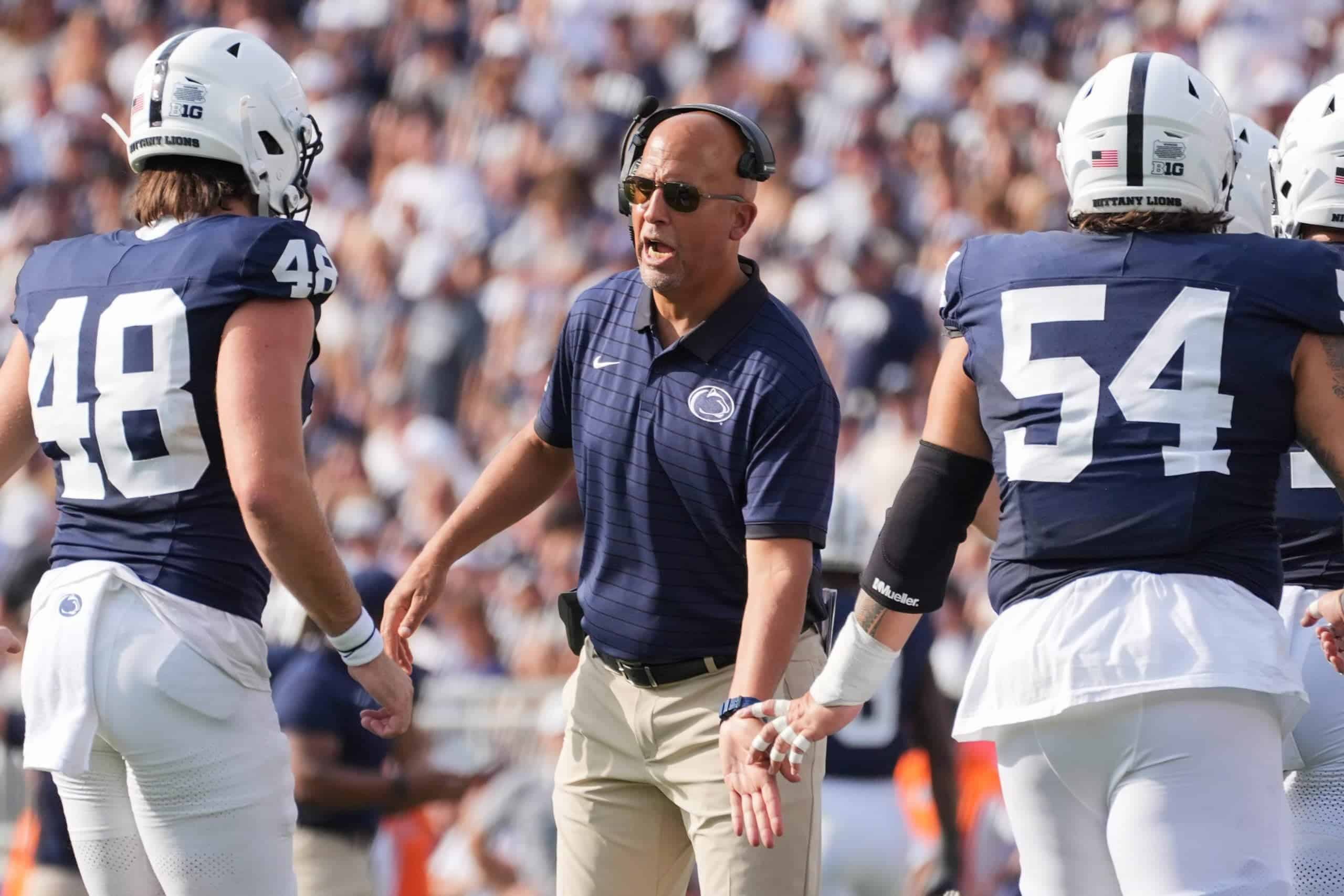
If you follow college football, you’ve probably heard that Penn State fired its football coach, James Franklin. Pay close attention to Dr. Rick Franza’s column this week as it relates to your boss(es).
Franza explains that the shelf life of coaches may mirror the length of service of those charged with managing companies in the CSRA.
In the more than eight years that I have been writing columns for multiple print and online publications in Augusta, this time of the year always provides fertile ground for applying business lessons learned from the world of sports (e.g., see last week’s column on accountability in the Notre Dame football program). I imagine this is probably because the sports I follow most closely are Major League Baseball (MLB) and college football. During this time of year, the successful MLB teams are competing for championships, while those less successful are evaluating what went wrong and are beginning to address those issues. In college football, we have reached the midpoint of the season, and many university administrations and fan bases are comparing their teams’ performances to date to their preseason expectations. Those doing particularly poorly sometimes choose to fire their head football coach, under the assumption that new leadership of the program is needed. Prior to this past weekend, UCLA, Virginia Tech, Arkansas, and Oklahoma State, all in “Power 4” Conferences, fired their head coaches before reaching the halfway point in the season. Then this past weekend, three more head coach firings took place, at Oregon State, Alabama-Birmingham, and Penn State, the latter being the most dramatic given both the recent and long-term successes of their fired head coach, James Franklin.
Franklin had come to Penn State in 2014 after three successful years at Vanderbilt. Franklin became the first Vanderbilt head coach to take the school to three consecutive bowl games and averaged eight wins a season at a school that had regularly struggled in the Southeastern Conference. This attracted the attention of Penn State, who hired him as head coach, and he was in the middle of his 12th season when he was fired on Sunday. In his time at Penn State, he had an overall record of 104-45 (almost a 70% winning percentage), including 64-36 (64% winning percentage) in the Big Ten. Penn State was ranked in the top ten in the country at the conclusion of five of the eleven complete seasons he was the head coach there. Most recently, in the 2024 season, Penn State ended up with its highest ranking in its tenure (#5) and barely missed being in the National Championship Game by being edged out by Notre Dame, 27-24, in the playoff semifinals. So, how did Franklin end up being fired a mere 10 months after the best season of what can be considered a very good career at Penn State without any hint of scandal or malfeasance?
First, we must look at the expectations for Penn State at the start of the 2025 season. They were ranked #2 in the country in the Associated Press’ pre-season poll and were the fashionable pick by many to win a national championship. While they lost some great players (e.g., Abdul Carter, Tyler Warren) to the NFL draft, they were returning many stars, including their outstanding quarterback and two great running backs. They cruised through an easy early schedule and were 3-0 entering a showdown at home with a fellow top ten team, Oregon. Despite his great record at Penn State, Franklin has not had a great record against other very good teams, and against Oregon, they fell behind by two touchdowns, but rallied back to tie the game, only to lose in overtime. While the loss hurt, it was not seen as a major upset. However, in the next two games, the season unraveled. First, they lost on the road to a UCLA team that had fired its coach and had never even had a lead in a game prior to their game with Penn State. Then, the final straw was a loss to an underwhelming Northwestern team at home. However, again, we must ask, was this enough for a coach to be fired, given his past record at Penn State? I did not think so, but then I listened to Penn State Athletic Director, Patrick Craft, and thought about what I have learned about the “shelf life” of leadership.
While Mr. Craft did not say it explicitly, when listening to him, I had the impression he felt that Franklin had “lost his locker room” and that the team was on a bad trajectory. Although the loss to UCLA could possibly be explained by a long trip to the West Coast following the emotional loss to Oregon, not playing hard at home versus Northwestern was inexcusable. The more I thought about this, I reflected on how I have often seen effective leadership wane somewhere in the eight-to-twelve-year mark of a leader’s tenure in an organization. I have seen it in business, academia, and sports (and it may be one of the reasons the military rotates its leaders much more frequently). To confirm what I was seeing, I did some research and found that there has been much written about the “shelf life of leadership”, and it does seem to be around ten years. Some of the major reasons that have been found for a limited term of effective leadership in an organization include:
- “Too Much of the ‘Same Voice’”: I wrote about this last year when the Atlanta Braves changed hitting coaches. Even though someone might have been successful in the past, eventually their message stops resonating, and the organization stagnates. A “new voice” is needed to break the stagnation.
- “Keep Doing It the Same Way”: Over time, particularly for leaders who have been successful for a while, they become less curious and more defensive of the way they do things. They think what worked before will always work, because it always has, even though things have changed.
- Leader/Organizational Burnout: Either the leader or the organization (or both!) can tire of one another. Energy levels can fluctuate, and passion and drive can be diminished, leading to a loss of effectiveness and a need for reinvention.
I will give you a week to ponder if either you or a leader in your organization has reached his or her leadership shelf life or is rapidly approaching it. Next week, I will provide you with some things that can be done to extend a leader’s shelf life, or when you, as a leader or an organization, should decide to move on.