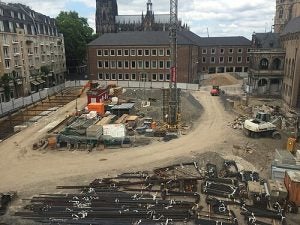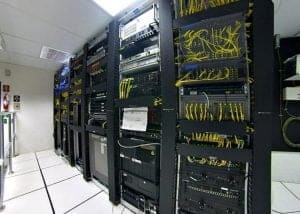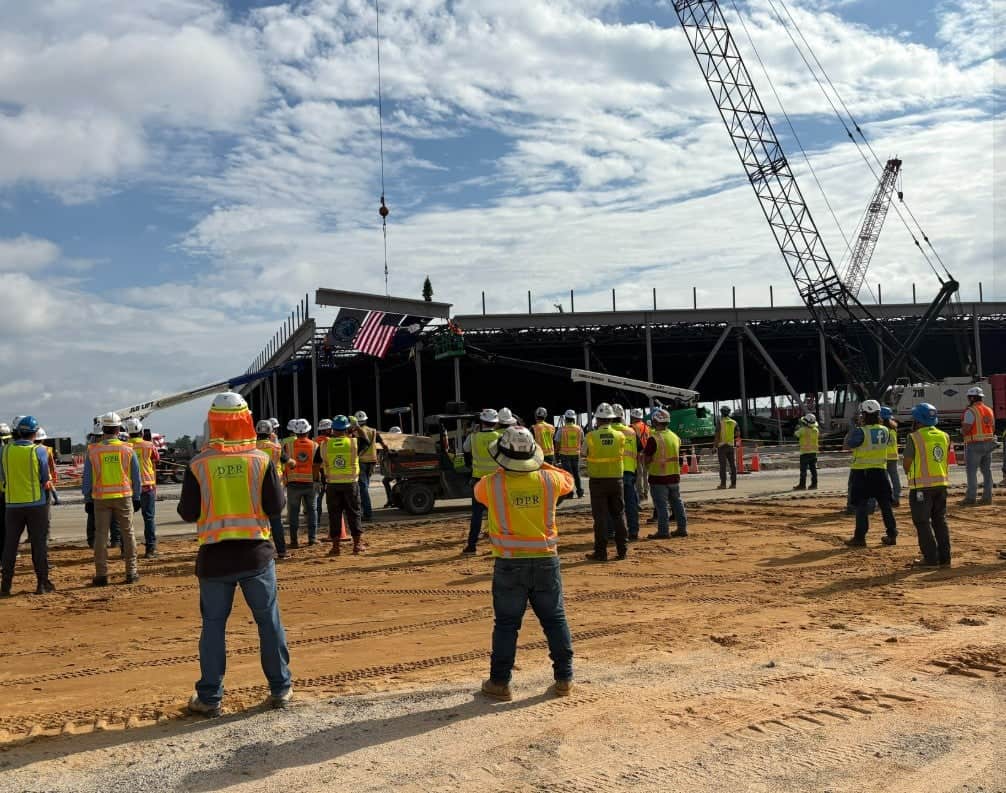
Will Williams, President and CEO of Western SC, has three data center projects under construction in Aiken County.
He has a few lessons learned he can share with his colleagues in other CSRA counties, ready to dive into the deep end of the data waters.
In Aiken County, the Meta facility being built in the Sage Mill Industrial Park is the largest of three data centers under construction in Aiken County. Williams said a solar field in Orangeburg County will help power the Meta center.
“Aiken Electric is the provider, and the solar field in Orangeburg County is going on to the Santee Cooper system, which feeds Aiken Electric,” said Williams. “It’s offsetting some of the use that Meta will have, not all of it, but some of it. Meta had to pay for a power study for Aiken Electric and Santee Cooper to say yes.”

In addition to the Meta center, a DC Blox hyper edge facility is being built along Atomic Road near the Hippodrome on Jefferson Davis Highway. DC Blox is based in Atlanta. Minnesota-based Oppidan Investment Company is building a $32 million, 60,000-square-foot data center on the west side of Bettis Academy Road, at Sage Mill Industrial Park.
Williams said Meta went through the zoning process for industrial development as required in Aiken County.
“They had to go through, check all the boxes off, just like any other industrial client does. They are using water from a system, not that they didn’t drill wells, so they had to approve that,” he said.
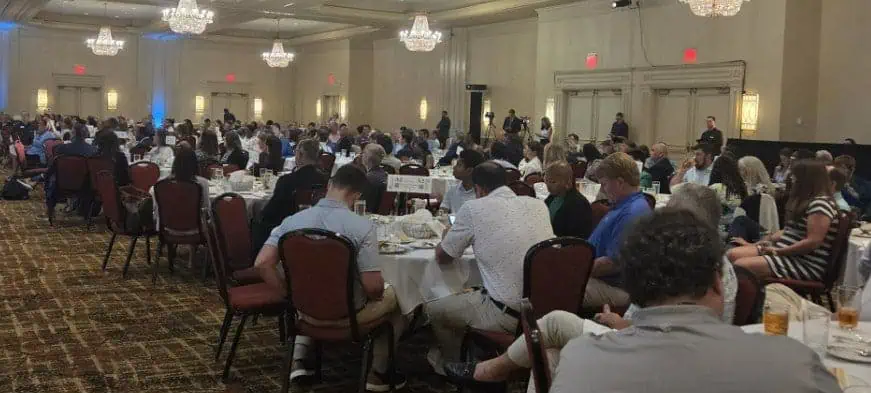
Recently, leaders of the Augusta business community learned about a data center planned along Gordon Highway and how it will impact the community. It was a panel discussion for the Augusta Metro Chamber of Commerce’s Member Economic Luncheon.
Among the attendees were Williams and Cal Wray, President of the Augusta Economic Development Authority (AEDA), who has been shepherding Richmond County’s Project Eisenhower for about four years.
Wray acknowledged there is anticipation and apprehension surrounding the development of data centers. The economic impact will be both short-term and long-term.
“Lots of jobs in construction, lots of investment going into construction,” he said, adding that once construction is finished, data centers need a smaller full-time staff, but those will be high-paying positions.
Among the concerns associated with the location of a data center is the impact on water supplies.
Jeff Greene, Senior Manager of Economic Development with QTS Data Centers, which is associated with Project Eisenhower, was a participant in the panel discussion. He said the facility will use about 18,000 gallons of water a day by using a closed-loop system to provide the cooling needed to protect servers.
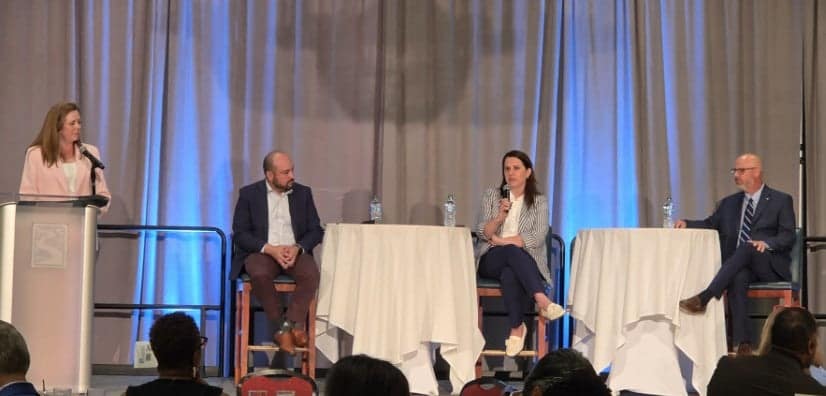
“It basically uses the equivalent of about one Olympic-sized swimming pool to fill a typical data center, and then it stays in that closed loop for the rest of its use,” he said.
Another concern is the amount of power needed to operate a data center, and concerns that it will raise customers’ bills.
“Georgia made some law changes. There will be minimal impacts from our perspective,” said Wray. “Each data center is different, even knowing how they power their facilities or the infrastructure they build themselves, so you have to look at each one individually. It’s not a catch-all.”
Local governments are looking at the growth and potential impact of data centers built within their municipalities. The Augusta Planning and Zoning Commission is asking commissioners to adopt a temporary moratorium on future developments, pending a zoning review.
Edgefield County is already reviewing a plan for data and crypto mining centers. County Council will be asked to vote on an ordinance restricting the construction of such facilities only to areas that are zoned industrial (ID). The five-page ordinance also lays out requirements on every aspect of the facility, from requiring a closed-loop cooling system to minimum distance from existing residences and landscaped buffers.
Wray suggests governments should consider taking it a step further.
“I think every community needs a data center-specific zoning to hold them accountable based on their parameters,” he outlined. “Specific zoning, so people know what is being zoned for, and not the catch-all industrial for every project.
Cleanview, based in Colorado, tracks where U.S. power infrastructure and data center developments are being built. Its website says there are 17 data centers currently operating in Georgia, with another 83 projects pending. South Carolina has 14 data centers in operation or planned.


Williams (left) and Wray agree it is up to the public to educate themselves on the pros and cons of any data center proposed in their area.
“There’s not a one size fits all for data centers,” Wray advised. “Each company has their own methods, they have their own cooling, they have their own power systems. You need to research the individual companies located in these centers, not a catch-all. Not everyone’s bad, or everyone’s good.”
“There’s a lot of factually inaccurate information,” added Williams. “In South Carolina, they can’t just pop up anywhere, because if they were to sink a well, they’re going to have to get approval to do that from the Department of Environmental Services. There’s so much factual misinformation out in this.”